If your drinking-and-driving case is going to be heard in the Akron Village Court, you are dealing with one of the smaller local courts in Erie County, and that brings its own particular rhythm. Bakshi & Leta have spent decades appearing in the village and town justice courts that ring Buffalo, and we know how a case moves through a court like Akron’s from the first appearance to the final disposition.
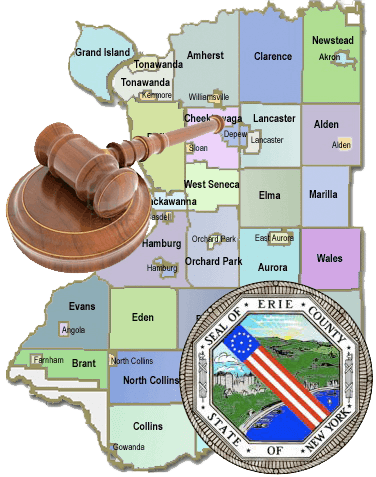
The Village of Akron sits in the northeast corner of Erie County, inside the Town of Newstead, where the rolling farmland of rural Erie County meets the historic line of the Erie Canal. It is a tight-knit community, and the village justice court that handles its cases reflects that scale. Understanding how this court operates, and how a DWI charge travels through it, is the first step toward protecting your license and your record.
How the Akron Village Court fits into the system
New York’s justice-court system gives villages and towns the authority to hear a wide range of criminal matters, including misdemeanor DWI charges. The Akron Village Justice Court is one of these local courts. It is presided over by a village justice and ordinarily sits on a part-time calendar rather than the daily schedule of a busy city court. That means court dates may be less frequent, and a case can take time to wind through arraignment, motions, conferences, and resolution.
One practical point catches many drivers off guard: where you were physically stopped determines which court hears your case. A traffic stop on a village street typically routes to the Akron Village Court, while a stop on a road in the surrounding Town of Newstead may instead be filed in the Newstead Town Court. The roads do not announce these boundaries. One of the first things we do is confirm exactly which court holds your case so nothing slips through a crack.
Where DWI stops happen around Akron
Akron is built around a small grid of village streets that feed into the larger county roads. Main Street is the spine of the village, and traffic from the surrounding farmland funnels through it. Route 93 runs through Newstead and links Akron to neighboring communities, carrying steady evening traffic. Buell Street and the residential lanes off Main also see local enforcement. Because the village sits near the Erie Canal corridor, the area draws visitors to its parks and historic sites, and weekend and holiday traffic can bring increased patrols.
An arrest can begin with something as ordinary as a brake light, a rolling stop, or a lane drift on a dark rural road with no streetlights. From that initial stop, an officer’s observations, the roadside field sobriety tests, and a chemical test build the case the prosecution will later rely on. Each of those steps is governed by rules, and each is a place where a careful defense can find a foothold.
What to expect when your case is in a village court
The first appearance is the arraignment, where the charges are read and the court addresses your license. In a DWI case, your driving privileges are commonly suspended at this stage. That is precisely why moving quickly matters: we work to secure hardship privileges and, where eligible, a conditional license so you can still drive to work, school, and medical appointments while the case is pending.
From there, a village court case proceeds through the same stages as any other New York DWI: the exchange of discovery, pretrial motions challenging the stop or the test, conferences with the prosecution, and, if a fair resolution cannot be reached, a hearing or trial. Because a court like Akron’s sits less often, the calendar can stretch out, and it pays to have counsel who keeps the case moving rather than letting it drift between distant dates.
DWI and DWAI under New York law
New York’s drinking-and-driving law turns on precisely which charge you are facing, and the labels are not interchangeable. The state charges Driving While Intoxicated (DWI), a crime generally brought at a blood-alcohol content of 0.08% or higher, and Driving While Ability Impaired (DWAI), a traffic infraction typically charged between 0.05% and 0.07%. A BAC of 0.18% or higher is charged as Aggravated DWI, with steeper penalties, and impairment by drugs is charged as DWAI–Drugs. The distinctions matter enormously, because a reduction from a DWI to a DWAI can mean the difference between a criminal conviction and a traffic infraction. Negotiating toward that kind of outcome is often the heart of the defense.
Why local experience matters in Akron
Small courts run on relationships and routine. Knowing how a particular court schedules its calendar, how its prosecutor evaluates a borderline test, and what the court expects from a defendant lets us guide a case efficiently and avoid the missteps that can drag matters out. Sunil Bakshi and Joseph Leta have appeared throughout the town and village courts of Erie County for years, and we bring that practical, on-the-ground familiarity to every Akron case.
We also make sure you are never left guessing. From the day after your arrest, we explain what each step means, what the court will likely do, and what your realistic options are. A DWI is stressful enough without being kept in the dark about your own case.
Akron court questions
Frequently asked questions
Call (716) 631-0004 for answers specific to your case.
A DWI charged within the Village of Akron is generally handled by the Akron Village Justice Court. Some arrests on roads in the surrounding Town of Newstead are instead heard in the Newstead Town Court. We confirm which court has your case and appear there for you.
Yes. A village court such as Akron’s typically sits on a limited schedule with a part-time village justice. The DWI and DWAI laws are identical to those everywhere in New York, but the pace, calendar, and personnel are local, which makes familiarity with the court valuable.
DWI (Driving While Intoxicated) is a crime generally charged at 0.08% BAC or higher. DWAI (Driving While Ability Impaired by alcohol) is a traffic infraction typically charged between 0.05% and 0.07%. The distinction carries real weight: a DWI leaves a criminal conviction on your record, while a DWAI does not, which is why a reduction from one to the other is often the goal of the defense.
In many misdemeanor DWI cases your attorney can appear for you at routine dates, though the court may require your presence at arraignment or for certain proceedings. We tell you exactly which dates you must attend and handle the rest.
DWI case in Akron Village Court? Call now.
The sooner you call, the more we can do to protect your license and your record. Free, confidential consultation.