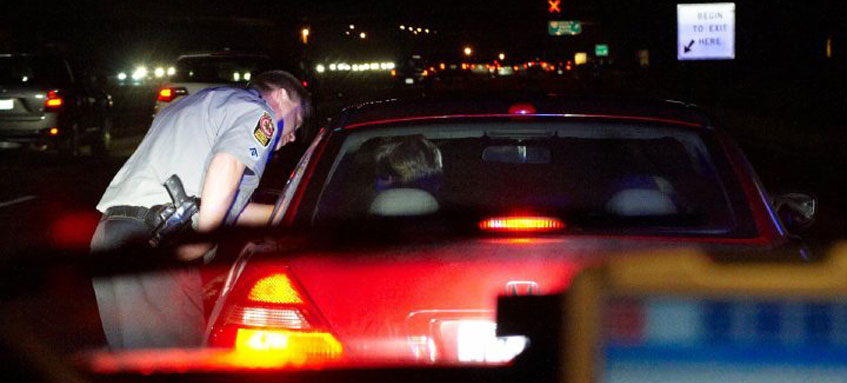
A DWI charge in Hamburg is not a ticket you can pay and forget. It is a criminal accusation with mandatory penalties that escalate sharply with your blood alcohol level and with any prior history. Driving While Intoxicated under New York’s Vehicle and Traffic Law section 1192 carries license revocation, fines, surcharges, an ignition interlock requirement, and a permanent criminal record on conviction. Sunil Bakshi and Joseph Leta defend these cases throughout Erie County, and the place to start is understanding exactly what the State is asking the Hamburg court to impose.
New York grades alcohol-related driving by the number on the breath or blood test, and the difference between one tier and the next is measured in months of revocation and hundreds of dollars in fines. Before you decide anything about your case, you should know which tier you are in and what it carries.
The DWI penalty tiers in New York
The statute draws hard lines based on blood alcohol concentration (BAC), and each line moves the stakes:
- DWAI by alcohol, BAC 0.05 to 0.07. A traffic infraction rather than a crime, but still serious: a 90-day license suspension and a fine of at least $300, plus state surcharges.
- DWI, BAC 0.08 or higher. A misdemeanor on a first offense, carrying a minimum six-month license revocation and a fine of at least $500, along with mandatory surcharges and the possibility of jail.
- Aggravated DWI, BAC 0.18 or higher. The most serious first-offense alcohol level, with a minimum one-year license revocation and a fine of at least $1,000.
- DWAI–Drugs and DWAI–Combination. Impairment by a drug, or by drugs and alcohol together, charged even when there is no alcohol breath reading at all.
Those are the floors, not the ceilings. Courts can and do impose more, and other factors, such as a child in the car, a high-speed accident, or an alleged injury, can add separate charges on top of the DWI itself.
Why the DWAI line matters so much
The gap between a DWAI infraction and a DWI misdemeanor is not a matter of vocabulary. It is the gap between a violation that leaves you without a criminal record and a crime that follows you. A DWAI keeps you out of the category of “convicted of a crime,” while a DWI conviction is a misdemeanor that can surface on a background check for years. For someone in Hamburg who drives to a job in Buffalo, holds a professional license, or simply does not want a criminal record, which label sticks can shape the rest of their life. That is why reducing a DWI to a DWAI is so often a central goal in negotiations, and why so much of our work is aimed at the charge itself rather than only at the sentence.
When a DWI becomes a felony
The single biggest driver of DWI exposure in New York is your record. A first DWI is a misdemeanor, but a second DWI within ten years can be charged as a class E felony, and a third within ten years as a class D felony. Felony DWIs bring dramatically higher fines, longer revocation periods, and the real possibility of state prison. If you were arrested in Hamburg and you have a prior DWI on your record, the case is in an entirely different category, and the defense has to account for that history from the very first appearance.
The ignition interlock requirement
A conviction for misdemeanor DWI or Aggravated DWI generally comes with a court-ordered ignition interlock device installed on any vehicle you own or operate, typically for a minimum of one year. The device is a breath-test unit wired to the ignition: the car will not start until you provide a sample below the set limit, and it prompts for rolling retests as you drive. You, the driver, bear the cost, commonly around $75 or more per month, plus installation and calibration fees. For a Hamburg commuter who relies on a car to reach a job in Buffalo, that is both an expense and a daily inconvenience, which is one more reason the level of the charge matters so much.
The DMV refusal hearing is a separate case
One of the most misunderstood parts of a DWI is that refusing the chemical test does not make the problem go away. It creates a second one. A refusal triggers a proceeding at the Department of Motor Vehicles that runs independently of the criminal case in the Hamburg court. If the refusal is sustained at the DMV hearing, your license is revoked for at least one year and a civil penalty applies, and that can happen even if the DWI itself is later reduced or dismissed. We represent clients at the refusal hearing and the criminal case together so the two tracks are coordinated rather than colliding; you can read more on our DMV hearings page.
How DWI enforcement plays out in Hamburg
Hamburg is a town in Erie County known as “The Town of Friendly” and as the home of the Erie County Fairgrounds, where “America’s Fair” draws huge crowds every summer. For most of the year that means a steady flow of local traffic, but during the fair, and on warm-weather weekends generally, traffic surges along Route 5 (the Lake Shore Road that hugs Lake Erie), as well as Route 62, US-219, Camp Road, and McKinley Parkway. Patrols along those corridors thicken accordingly, and Route 5 in particular is a known route home from the Southtowns waterfront, which makes the lakeshore a common setting for a Hamburg DWI stop. Knowing where and when these arrests cluster helps us evaluate whether the stop and the testing that followed were handled properly.
More patrols do not lower the standard. An officer still needs a genuine, articulable reason to pull you over, such as a moving violation, an equipment problem, or observable erratic driving. A sobriety checkpoint has to be conducted under strict, pre-established procedures rather than at an officer’s discretion. We take apart the basis for the stop: what was actually observed, whether there was real cause, and, if a checkpoint was involved, whether it followed the constitutional rules. When the foundation is missing, the evidence built on top of it may be challenged or suppressed.
The hidden costs beyond the fine
The statutory fines are only the part of a DWI that the court announces out loud. New York adds a mandatory state surcharge and crime-victim assessment on top of any fine, and a misdemeanor or felony conviction also carries Driver Responsibility Assessments billed by the DMV over a period of years, a separate, recurring charge that has nothing to do with what the judge orders. Add the cost of an ignition interlock, the premium increase or non-renewal that frequently follows on auto insurance, and the time lost to court dates and required programs, and the true price of a DWI conviction climbs far above the headline numbers. For many Hamburg drivers these downstream costs are the most lasting part of the case, and they are one more reason that the difference between a DWAI infraction and a DWI misdemeanor is worth fighting over.
The Impaired Driver Program and conditional license
Losing your license outright is not always the end of the road. Your privileges are typically suspended at your first appearance in the Hamburg court, but hardship privileges can often be secured quickly so that essential driving continues while the case is pending. From there, many drivers can enroll in New York’s Impaired Driver Program (the alcohol and drug education course run through the DMV) and become eligible for a conditional license that permits driving for specific purposes such as work, school, medical appointments, and the program itself. For someone in Hamburg who commutes north to Buffalo or relies on a car to hold a job, that conditional license can be the difference between weathering a case and losing employment over it. Eligibility depends on your record and the specifics of the charge, and a refusal can complicate it, which is why we map out the license path early rather than letting it become an afterthought.
Building a defense to the charge
A DWI case is far more contestable than the breath number suggests. We start at the stop itself, then move to the roadside tests: the walk-and-turn, the one-leg stand, and the horizontal gaze nystagmus test. Those tests look far more scientific than they are. Each is scored by an officer’s subjective judgment and is easily thrown off by a sloping shoulder on Route 5, a cold wind coming off the lake, the wrong footwear, exhaustion after a long day at the fair, or ordinary nerves. We then go after the chemical test: the calibration and maintenance records for the breath instrument, the certification of the operator, the observation period before the test, and the chain of custody for any blood draw. Any meaningful gap can undercut the reading the entire prosecution depends on. You can read more about how we approach these cases on our DWI defense page, and see the communities we cover on our areas we serve page.
What to do in the hours and days after a Hamburg arrest
The period right after an arrest is when people do the most damage to their own cases, usually by trying to talk their way out of it or by assuming the situation is hopeless. Neither helps. You are not required to explain how much you had to drink, where you were coming from, or how you were feeling, and politely declining to discuss those things is your right. What you should do is write down everything you remember while it is fresh: the time, the stretch of Route 5 or Camp Road where you were stopped, what the officer said, how the roadside tests were administered, the weather, and whether anything about the equipment seemed off. Keep every piece of paper you were handed, including the appearance ticket that tells you when to be in the Hamburg court. Those details are the raw material of a defense, and they fade quickly. Then call a lawyer before your first court date rather than after it, because the earliest decisions in a case are often the ones that matter most.
What an out-of-state license means for a Hamburg case
A large share of the people who call us about a Hamburg arrest are not from New York at all. The Erie County Fair, the Lake Erie waterfront, and the Bills and Sabres draw visitors from Pennsylvania, Ohio, Ontario, and well beyond, and an arrest a long way from home raises questions a local resident never has to think about. If you hold a license from another state, a New York DWI or DWAI conviction is reported back to your home state through the interstate compact that links most motor-vehicle agencies, and your home DMV decides what to do with it under its own rules. You also do not necessarily have to be present in New York for every step of the case, and we can often appear on your behalf so you are not driving back to Hamburg for routine court dates. The point is simple: an arrest while passing through does not stay neatly inside New York, and it should be handled by someone who knows how the New York charge will travel.
Where a Hamburg DWI is prosecuted
Most DWI charges from the Town of Hamburg are handled in the Hamburg Town Court, while some matters arising inside the Village of Hamburg may proceed in the village court. Both sit within Erie County, and we appear regularly in the town and village courts across the county. That familiarity with local practice (what each court expects at arraignment, in pretrial motions, and in plea negotiations) lets us push the case forward efficiently while keeping you informed at every stage.
What the prosecution has to prove
It is easy to assume that a breath reading settles everything, but the State still has to prove its case, and every element is a place where the defense can apply pressure. The prosecution has to establish that you were operating the vehicle, that the stop and any testing were lawful, that the breath or blood instrument was working properly and run correctly by a certified operator, and that the result was obtained within the required window and procedures. A reading taken after a faulty observation period, an uncalibrated machine, a broken chain of custody on a blood sample, or a stop that lacked a lawful basis can all be challenged, and when a key piece falls out, what looked like a routine DWI can become a negotiable case or, in the right circumstances, a dismissible one. Our job is to test each element rather than treat the number on the printout as the last word.
Why local experience changes the outcome
Two cases with nearly identical facts can end very differently depending on who handles them and where. A defense built around boilerplate rarely fits the specifics of a stop on the Lake Shore Road during fair week, and a lawyer who has never stood in front of the Hamburg court does not know its rhythms. Bakshi & Leta have spent decades in the town and village courts of Erie County, and that experience shows up in practical ways: knowing what a reduction to DWAI realistically takes in a given posture, recognizing when a breath-test record has a problem worth litigating, and understanding how to protect a client’s ability to keep driving while the case is pending. The goal never changes: the least possible damage to your record, your license, and your life.
Hamburg DWI questions
Frequently asked questions
Call (716) 631-0004 for answers specific to your case.
New York sets three main alcohol thresholds. DWAI by alcohol covers a BAC of about 0.05 to 0.07 and is a traffic infraction carrying a 90-day suspension and a minimum $300 fine. DWI begins at 0.08, is a misdemeanor on a first offense, and carries at least a six-month revocation and a minimum $500 fine. Aggravated DWI applies at 0.18 or higher with a minimum one-year revocation and a minimum $1,000 fine. We defend all three in the Hamburg courts.
DWI is a crime, a misdemeanor on a first offense, generally tied to a 0.08 or higher reading or to proof of intoxication through an officer’s observations. DWAI by alcohol is only a traffic infraction, applying in the 0.05 to 0.07 range or where impairment is shown without intoxication. There is also DWAI–Drugs and a combination charge. Which label applies changes the penalties dramatically, so it is often the heart of the defense.
For a misdemeanor DWI or Aggravated DWI conviction, New York generally requires an ignition interlock on any vehicle you own or operate, typically for at least a year. The device tests your breath before the car will start, and the driver pays the monthly cost, commonly around $75 or more per month plus installation. We work to limit interlock exposure wherever the facts allow.
Yes. A first-offense DWI is a misdemeanor, but a second DWI within ten years can be charged as a class E felony, and a third within ten years as a class D felony, with steeper fines, longer revocations, and the possibility of state prison. Because prior convictions drive the exposure so heavily, a repeat DWI in Hamburg should be defended carefully from the start.
A chemical test refusal triggers a separate proceeding at the DMV that is independent of the criminal case in the Hamburg court. If the refusal is upheld at the DMV hearing, your license is revoked for at least one year and a civil penalty applies, even if the underlying DWI is later reduced or dismissed. We represent clients at both the refusal hearing and the criminal case so the two tracks are handled together.
Late summer brings enormous crowds to the Erie County Fairgrounds, and patrols along Route 5, Route 62, McKinley Parkway, and Camp Road tend to increase while the fair is running. More patrols mean more stops, but every stop still has to be supported by a lawful reason. We look closely at why you were pulled over during a high-traffic event and whether that stop holds up.
Most alcohol-related driving charges from the Town of Hamburg are prosecuted in the Hamburg Town Court, while some matters arising inside the Village of Hamburg may be handled in the village court. Both sit within Erie County, and we appear regularly in the town and village courts across the county, so we know how Hamburg matters tend to move from arraignment through resolution.
Charged with DWI in Hamburg? Call now.
The penalties climb with your BAC and your record, and the DMV case runs alongside the criminal one. Get experienced defense on your side today. Free, confidential consultation.