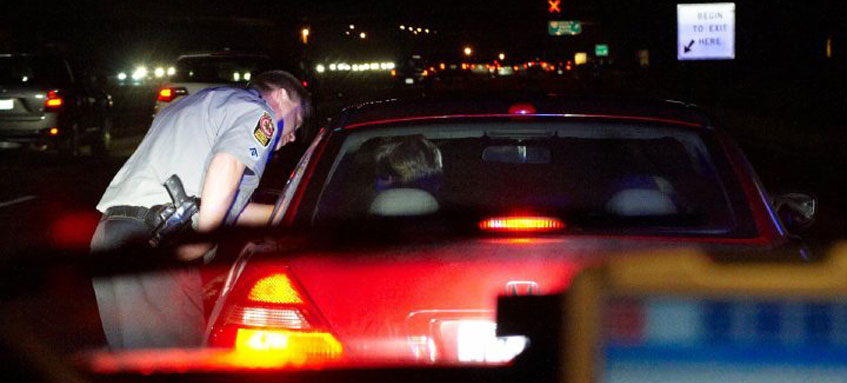
A DWI conviction in Tonawanda is not a simple traffic ticket. It carries mandatory fines, the loss of your license, an ignition interlock device installed at your own expense, and, in the wrong circumstances, a felony record. New York’s drinking-and-driving penalties are among the harshest in the nation, and they scale sharply with your blood-alcohol content and your history. If you have been charged in the Town or City of Tonawanda, Sunil Bakshi and Joseph Leta have more than 25 years of focused DWI experience and can help you understand exactly what is at stake.
This page covers the two things that matter most in the days after an arrest: which Tonawanda court your case belongs in, and what New York can actually do to your license, your wallet, and your record. The consequences depend heavily on your BAC tier and on whether you have any prior conviction in the past decade. Understanding where your charge falls is the first step toward limiting the damage, and it is exactly the analysis we walk every client through.
Which Tonawanda court will hear your case?
One of the most important, and most confusing, questions in a Tonawanda case is simply which court you have to appear in. Tonawanda is actually two distinct municipalities, and each has its own court:
- The Town of Tonawanda is the larger of the two and includes the densely populated Kenmore area near the Buffalo line. Charges arising in the Town are handled in the Town of Tonawanda Town Court.
- The City of Tonawanda is the smaller, separate city at the northern end, along the Niagara River and the Erie Canal. Charges arising inside the city limits are handled in the City of Tonawanda City Court.
Both the Town and the City of Tonawanda sit in Erie County. If a charge is elevated to a felony, for example a repeat DWI within ten years, the case is sent up to Erie County Court in Buffalo. Identifying the correct court at the outset matters, because each court has its own personnel, schedule, and expectations, and an appearance in the wrong place wastes time you do not have.
Tonawanda is not North Tonawanda, and why that matters
This is the mistake we see most often, so it is worth being very clear. Tonawanda, both the Town and the City, is in Erie County. North Tonawanda is an entirely separate city in Niagara County, sitting just across the Erie Canal. The names are nearly identical and the communities sit side by side, but they fall under different counties and different court systems.
For your case, the practical question is which side of the canal the traffic stop happened on. A stop in Tonawanda stays within the Erie County court system and its local Town or City Court. A stop in North Tonawanda is a Niagara County matter handled by a different court. Confusing the two can send you to the wrong courthouse, cause you to miss a deadline, or leave you reading penalty information that does not match your charge. When you call us, one of the first things we confirm is exactly where you were stopped so we direct your defense to the right place from day one.
New York DWI charges and their BAC tiers
New York grades alcohol-related driving offenses into tiers, and each tier carries its own penalty range. The tier your case falls into is driven largely by your blood-alcohol content:
- DWAI–Alcohol (0.05% to 0.07% BAC): a traffic infraction rather than a crime, generally carrying a 90-day license suspension and a fine starting at $300. This is frequently the target of a negotiated plea.
- DWI (0.08% BAC or higher): a misdemeanor crime, charged on a breath or blood result at or above that level or on other evidence of intoxication. A first conviction carries a minimum six-month license revocation and a fine of at least $500.
- Aggravated DWI (0.18% BAC or higher): a crime requiring a one-year revocation and a minimum fine of $1,000.
- DWAI–Drugs and DWAI–Combination: driving impaired by a drug, or by drugs and alcohol together, with a mandatory minimum six-month revocation and a fine of at least $500 for the misdemeanor drug charge.
Each tier moves the needle on fines, the length of revocation, and your exposure to jail. Our broader explanation of how these charges are built and challenged appears on our DWI defense page.
License revocation and the ignition interlock device
For many Tonawanda drivers, losing the ability to drive is the most immediate and painful penalty. A DWI conviction triggers a hard revocation, not a brief suspension, and getting your license back requires a formal application to the DMV after the revocation period ends. There is no automatic reinstatement.
On top of that, New York requires an ignition interlock device on every vehicle you own or operate following a misdemeanor or felony DWI conviction. You pay for the installation and the monthly monitoring, commonly $75 or more each month, for the full period the court sets, and in most cases the device stays in place even while your license is revoked. Interlock violations can extend the requirement or trigger new charges, so compliance matters.
Fines, surcharges, and the costs behind the headline
The statutory fine is only the beginning. A Tonawanda DWI conviction also brings mandatory court surcharges, DMV driver responsibility assessments billed over several years, and the cost of any required alcohol screening or program. Insurance premiums typically rise sharply after a conviction, and the financial impact can stretch on long after the case closes. When we evaluate a resolution, we look at the full cost, not just the line item on the plea.
When a Tonawanda DWI becomes a felony
A first-offense DWI is usually a misdemeanor, but several circumstances push a Tonawanda charge into felony territory, where the stakes climb dramatically:
- A prior DWI within ten years. A second DWI conviction inside that window is charged as a felony, with longer revocation, larger fines, and possible state prison exposure.
- Leandra’s Law. Driving while intoxicated with a child age 15 or younger in the vehicle is an automatic felony, even on a first offense.
- Serious injury or death. Charges such as vehicular assault or aggravated offenses raise the matter to a far more serious felony level.
Felony DWI cases do not stay in the local Town or City court. They are sent up to Erie County Court in Buffalo. A felony conviction means a permanent record with consequences for employment, professional licensing, firearm rights, and immigration status. These are exactly the cases where experienced defense counsel matters most.
Leandra’s Law and child-in-the-vehicle penalties
Leandra’s Law deserves its own mention because of how harshly it treats a first offense. Under the law, anyone who drives while intoxicated with a child 15 or younger in the car faces automatic felony charges, and a conviction can carry additional consequences involving family court and child protective authorities. The law also cemented the statewide ignition interlock requirement for DWI convictions. If your case involves a child passenger, the exposure is severe and the need for prompt, capable representation is urgent.
The chemical-test refusal and the separate DMV penalty
One of the most misunderstood penalties does not come from the criminal court at all. If you declined the chemical breath or blood test after a Tonawanda arrest, New York’s implied-consent law triggers a separate proceeding before the Department of Motor Vehicles. A finding that you refused carries a mandatory one-year license revocation and a substantial civil penalty, and it applies even if you are later acquitted or the criminal charge is reduced in court. These refusal hearings are scheduled quickly and run on their own rules, entirely apart from your court date, so missing one can cost you your license by default. We represent drivers at these hearings, cross-examine the arresting officer, and look for the procedural gaps that can defeat a refusal finding. Our DMV hearings page explains the process in more detail.
What a DWI conviction means long after the case ends
The fines and revocation are only the consequences you can see on the day of sentencing. A DWI conviction in New York creates a permanent criminal record that does not go away (New York does not allow DWI convictions to be sealed in the way some other offenses can be), and that record surfaces on background checks for years. For working drivers the stakes are higher still: a commercial driver who is convicted faces disqualification of the CDL that their livelihood depends on, and nurses, teachers, and other licensed professionals may face reporting obligations to their licensing boards. Because the Town of Tonawanda and Kenmore sit so close to the Niagara River crossings into Ontario, a conviction can also create real difficulty entering Canada, which can treat impaired driving as a serious offense for admissibility purposes. These long-tail consequences are why we treat even a first-offense misdemeanor as a serious matter worth fighting. A reduction to a non-criminal DWAI, where the facts support it, can spare a client years of collateral damage.
Where Tonawanda stops commonly happen
Tonawanda’s busy road network gives police many opportunities for traffic and impaired-driving stops. Much of the enforcement we see clusters along the area’s heavy commercial corridors and highway ramps:
- Sheridan Drive and Delaware Avenue, two of the area’s busiest commercial routes through the Town and Kenmore.
- Niagara Falls Boulevard, lined with restaurants and shopping and active late into the night.
- Colvin Boulevard and Two Mile Creek Road, common neighborhood through-routes.
- Interstate 290 (the Youngmann Expressway) and its on- and off-ramps, where many stops begin.
The Niagara River waterfront and the parks and businesses along it also draw evening traffic. No matter where in Tonawanda your stop took place, we examine why the officer pulled you over, how the roadside investigation was conducted, and whether your rights were respected.
How we defend a Tonawanda DWI
High penalties do not mean the prosecution’s case is airtight. One of the most damaging myths about impaired-driving cases is that a breath reading or a failed roadside test means the outcome is already decided. It does not. The evidence behind a Tonawanda arrest is far more vulnerable than most people assume, and we scrutinize every stage of it.
The roadside field sobriety tests (the walk-and-turn, the one-leg stand, and the horizontal gaze nystagmus eye test) are scored on the officer’s subjective judgment and are easily thrown off by cold weather on a Sheridan Drive shoulder, uneven pavement, the wrong footwear, fatigue, anxiety, or an ordinary medical condition such as an inner-ear problem or a back injury. The breath instrument that produced your number is only as reliable as its last calibration and the training of the operator who ran it. We obtain the device’s maintenance and calibration logs, the operator’s certification, and the testing checklist, and we look for the deviations that can render a result inadmissible or unpersuasive. Just as important, we test whether the officer had a lawful basis to stop you in the first place (on Delaware Avenue, Niagara Falls Boulevard, an I-290 ramp, or anywhere else), because if the stop was improper, everything that followed may be challenged.
Because we appear regularly in the Town of Tonawanda Town Court and the City of Tonawanda City Court, we know how each court operates and what each expects. Where we cannot win an outright dismissal, we work to reduce a DWI to a lesser charge such as DWAI, to limit the penalties, and to keep your record as clean as possible.
Your first steps after a Tonawanda arrest
What you do in the hours and days after an arrest can shape the entire case. A few practical points:
- Find your court date. Your release paperwork lists when and where you must appear. Confirm whether it is the Town or City court.
- Do not discuss the stop. Avoid explaining or apologizing to anyone but your lawyer; casual statements can be used against you.
- Keep every document. Hold on to the tickets, any chemical-test paperwork, and the temporary license or suspension notice.
- Call an attorney quickly. Acting fast lets us address your suspended license before your first appearance.
At arraignment the court will usually suspend your driving privileges, which can leave you without a way to reach work, school, or medical appointments. By reaching out early, we can move to obtain hardship privileges and a conditional license so your daily life continues while we fight the charge.
Serving Tonawanda, Kenmore & all of Erie County
From our Williamsville office at 5662 Main Street, we are minutes from the Tonawanda courts and represent drivers across the Town of Tonawanda, the City of Tonawanda, Kenmore, and the rest of Erie County. To see every community and court we cover, visit our areas we serve page.
The penalties for a Tonawanda DWI are steep, but they are not automatic; the right defense can change the outcome. Call Bakshi & Leta today at (716) 631-0004 for a free, confidential consultation.
It depends on exactly where the stop happened. A charge in the Town of Tonawanda, including the Kenmore area, is handled in the Town of Tonawanda Town Court, while a charge inside the City of Tonawanda goes to the City of Tonawanda City Court. Both sit in Erie County. Felony-level charges are sent to Erie County Court in Buffalo.
No, and the difference matters for your case. Tonawanda, both the Town and the City, is in Erie County on the Niagara River. North Tonawanda is a separate city in Niagara County across the Erie Canal. A Tonawanda case stays in the Erie County court system, so it is important to confirm which side of the canal the stop occurred on.
New York sets several tiers. DWAI–Alcohol covers a BAC of 0.05% to 0.07% as a traffic infraction. DWI is charged at 0.08% or higher as a misdemeanor crime. Aggravated DWI applies at 0.18% or higher. Separate DWAI–Drugs and DWAI–Combination charges cover impairment by drugs or by drugs and alcohol together.
Almost certainly. A misdemeanor or felony DWI conviction in New York requires an ignition interlock device on any vehicle you own or operate, at your own expense of roughly $75 or more per month, for a period set by the court. The device must usually stay installed even while your license is revoked.
A first DWI is generally a misdemeanor. It becomes a felony when you have a prior DWI conviction within the past ten years, or when aggravating factors are present, such as driving with a child age 15 or younger in the vehicle under Leandra’s Law. Felony DWI cases are handled in Erie County Court in Buffalo.
Leandra’s Law makes it an automatic felony to drive while intoxicated with a child age 15 or younger in the vehicle, even on a first offense. It also requires an ignition interlock device for anyone convicted of a misdemeanor or felony DWI. The penalties are severe, which is why early legal help matters.
Note your arraignment date, avoid discussing the stop with anyone but a lawyer, and gather your paperwork and any chemical-test result. Then call an attorney quickly. Acting fast lets us seek a conditional license so you can keep driving and begin protecting your record before your first court date.
Facing a DWI in Tonawanda? Call now.
Mandatory fines, revocation, and interlock are on the table; the right defense can limit them. Free, confidential consultation.