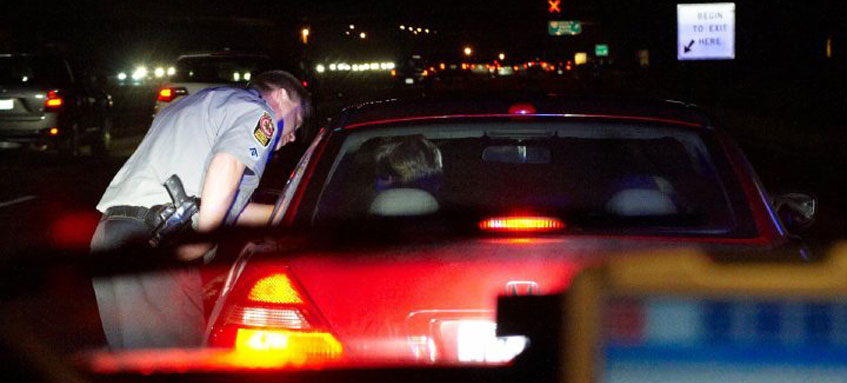
A DWI charge in the Town of Cheektowaga is a criminal matter, and the law treats it accordingly. From the minimum fine to the mandatory license revocation to the ignition interlock device the state will require, New York’s drinking-and-driving statutes are among the toughest in the nation. If you have been charged after a late-night stop on Walden Avenue or near the Walden Galleria, one thing is worth saying up front: most of our clients are ordinary people who have never been in trouble before. Sunil Bakshi and Joseph Leta have spent more than 25 years defending exactly these cases across Erie County.
Unlike a simple traffic ticket, a DWI conviction in New York follows a defined set of rules with consequences that reach into your driving privileges, your finances, and your permanent record. Knowing precisely how the charge is graded, and where your case fits, is the foundation of a strong defense. Below we walk through the charges New York actually brings, the real penalties, how stops happen here, the science of the breath test, the court that will hear your case, and the separate license fight that runs alongside the criminal case.
The New York DWI tiers, and where your case falls
New York does not treat every alcohol-related stop the same. Its Vehicle and Traffic Law contains several distinct offenses, and sorting out which one applies to you shapes everything that follows. The charge depends largely on your measured blood-alcohol content (BAC) and on the circumstances of the stop:
- DWAI (Driving While Ability Impaired): generally charged between 0.05% and 0.07% BAC. This is a traffic infraction rather than a crime, carrying a 90-day suspension and a minimum fine of $300.
- DWI (Driving While Intoxicated): generally charged at 0.08% BAC or higher. This is a crime; a first offense is a misdemeanor with a minimum fine of $500 and a minimum six-month revocation.
- Aggravated DWI: a BAC of 0.18% or higher, treated as a more serious crime with a minimum fine of $1,000 and a one-year revocation.
- Aggravated DWI under Leandra’s Law: driving while intoxicated with a child under 16 in the vehicle, which is charged as a felony regardless of BAC.
- DWAI–Drugs: impairment caused by drugs rather than alcohol, which has become more common as officers are trained to look for it and which does not depend on a BAC reading at all.
Where your reading lands within these tiers can mean the difference between a non-criminal infraction and a misdemeanor, or between a misdemeanor and a felony. Because the consequences range from a fine on a traffic ticket all the way to a criminal record and jail, the label on your charge is never a technicality. A core part of our work as a Cheektowaga DWI lawyer is challenging the reliability of that number and, where the facts allow, moving the case down this ladder toward the least serious resolution available.
The real penalties behind a Cheektowaga DWI
A DWI conviction does far more than cost you a fine. New York requires an ignition interlock device on every vehicle registered in your name, at your own expense of roughly $75 or more per month, for a period set by the court. On top of the statutory fines and the mandatory revocation, a conviction brings:
- A permanent criminal record that can surface in background checks for jobs and housing.
- Sharply higher auto-insurance premiums for years.
- Mandatory surcharges and a state driver-responsibility assessment.
- Possible barriers to professional licensing and to travel into Canada, a real concern this close to the border.
- For commercial drivers, nationwide reporting of any CDL-related conviction.
Repeat offenses within ten years are charged as felonies and carry dramatically harsher penalties, including longer revocations, far larger fines, and the genuine possibility of jail or state prison.
How drunk-driving stops happen in Cheektowaga
Cheektowaga sits at the busy eastern edge of Buffalo, wrapped around the Buffalo Niagara International Airport and threaded by some of the region’s heaviest traffic. The Thruway (I-90) runs through the town, and surface routes like Walden Avenue, Genesee Street, Union Road, William Street, and Harlem Road carry steady streams of cars to and from the airport, the Walden Galleria, and the neighboring communities of Buffalo, Depew, and West Seneca. That volume, combined with the restaurants and nightlife clustered near the mall and along Walden, keeps patrols active late at night and on weekends, and stops here are common.
A stop usually begins with something ordinary: a lane drift, a brake light out, an expired registration, or a roadside checkpoint. From there the encounter can escalate quickly into field sobriety testing and a request for a breath sample. Knowing how a routine traffic stop becomes a DWI arrest explains why the details of your stop (where it happened, what was said, and what the officer did) matter so much to your defense.
What to expect at the roadside
An officer who suspects impairment will typically ask you to step out of the car and perform standardized field sobriety tests: the walk-and-turn, the one-leg stand, and the horizontal gaze nystagmus (eye-tracking) test. You may also be asked to blow into a handheld roadside screening device before any arrest decision is made. If you are arrested, you will then be taken for a chemical test on a calibrated instrument at the station, and either given an appearance ticket or held for arraignment. What you say and do in those first few minutes at the roadside can shape the entire case.
The breath test is evidence, not a verdict
In most DWI prosecutions the chemical breath test is the centerpiece of the State’s case, and many people assume the number on the machine settles everything. It does not. Breath-testing instruments must be properly calibrated, regularly maintained, and operated by a certified technician following an exact protocol. We routinely obtain and review the device’s maintenance and calibration records, the operator’s certification, and the testing logs, looking for any deviation that could render the result unreliable.
The same scrutiny applies to the field sobriety tests performed at the roadside. Those tests are subjective by nature and easily affected by nerves, footwear, uneven or icy pavement, and medical conditions. In a town where winter weather and busy shoulders along Walden Avenue, Union Road, and Harlem Road are facts of life, the conditions under which a test was given can matter as much as the result itself.
The refusal hearing: your license is at stake separately
One of the most important things to understand about a New York DWI is that your license is fought over in two arenas at once. The criminal court handles the DWI charge, but the Department of Motor Vehicles runs its own, entirely separate process. If you declined the chemical test, the DMV holds a refusal hearing, and a finding that you refused carries a mandatory one-year revocation, even if you are never convicted of the DWI itself.
These hearings are scheduled quickly, are governed by their own rules, and are easy to lose by default if no one appears. We have handled hundreds of refusal hearings and know the process and personnel. If a refusal is part of your case, learn more on our DMV hearings page and call us immediately so nothing lapses while the criminal case is still getting underway.
What happens after a DWI arrest, step by step
Knowing the sequence ahead of you removes some of the fear. A typical Cheektowaga DWI moves through several stages, and we are involved at each one:
- Arraignment. Your first court appearance, where the charges are read and the judge usually suspends your license pending prosecution. This is the moment many people panic, because suddenly they cannot get to work, drop the kids at school, or keep medical appointments. It is also where we move for hardship privileges and a conditional license so you are not stranded.
- Discovery and motions. We demand the police paperwork, the breath-test records, and any video, then file motions to suppress evidence that was obtained improperly.
- Negotiation. Armed with the weaknesses in the State’s proof, we negotiate toward the lowest appropriate charge: in the right case, a reduction from DWI toward a non-criminal DWAI.
- Hearing or trial. When the evidence warrants it, we are prepared to litigate suppression hearings or take the case to trial rather than accept an unfair result.
At every stage we keep you informed, because decisions about your license, your record, and your money should be made with a full understanding of where the case stands.
Questions we hear most often in Cheektowaga
A few points come up again and again in that first conversation with a new client, and getting clear answers early, before any court date, often makes the difference between a frightening unknown and a manageable plan:
- Will this be a criminal record? It depends on the charge. A DWI or Aggravated DWI is a crime; a DWAI for alcohol is a traffic infraction. Which one you face, and which one we can negotiate toward, shapes whether anything appears on a criminal record.
- Did I have to do the roadside tests? The standardized field sobriety tests are voluntary, yet most people perform them simply because they were asked. How those tests were given is often where a defense begins.
- How fast do I need to act? Quickly. License consequences can attach at your very first appearance, and some deadlines, including the DMV refusal hearing, run on their own clock no matter what happens in criminal court.
Which court will hear your Cheektowaga case
Where your case is heard comes down to exactly where you were stopped. Charges arising in the Town of Cheektowaga are generally handled in Cheektowaga Town Court, while stops on the Thruway or over the line in the City of Buffalo can land elsewhere in Erie County. Each court has its own personnel, its own pace, and its own expectations. A lawyer who appears in these courthouses regularly can anticipate how your case will be treated and negotiate from a position of genuine familiarity rather than guesswork. We also handle the related charges that frequently ride along with a stop, from speeding to other moving violations, and you can read more on our speeding & traffic page.
How we defend DWI cases in Cheektowaga
When we take on a Cheektowaga DWI, we reconstruct the stop from the beginning (the reason the officer pulled you over, the roadside testing, the arrest, and the chemical test), and we move quickly on the parts that cannot wait.
Because your license is typically suspended at arraignment, our first priority is often securing hardship privileges and a conditional license so you can keep getting to work, school, and medical appointments. From there we handle the motions, hearings, and negotiations, and we go to trial when that is the right call. Throughout, we explain each decision in plain language so you understand your options. You can read more about our full DWI practice on our DWI defense page, and review every community we cover on our areas we serve page.
Local to Cheektowaga and the East Side suburbs
Our office on Main Street in Williamsville is a short drive from Cheektowaga, and we regularly represent drivers from across the eastern suburbs, including Depew, West Seneca, and the City of Buffalo, as well as the many town and village courts of Erie County. Whether your stop happened on the Thruway near the airport, on Harlem Road, or in the lot of the Walden Galleria, we know the Erie County courts where your case will be heard and how to position your defense within them.
A DWI in Cheektowaga is serious, but a charge is not a conviction, and you do not have to face it alone or in the dark. The right defense can protect your license, your finances, and your future. Call Bakshi & Leta today at (716) 631-0004 for a free, confidential consultation.
Cheektowaga DWI questions
Frequently asked questions
Call (716) 631-0004 for answers specific to your case.
New York uses several thresholds. DWAI (alcohol) is typically charged between 0.05% and 0.07% BAC and is a traffic infraction. DWI is generally charged at 0.08% or higher and is a crime. Aggravated DWI applies at 0.18% or higher, or when driving impaired with a child in the vehicle under Leandra’s Law. The tier you face drives the penalties.
A first-offense DWI is generally a misdemeanor with a minimum fine of $500, a minimum six-month license revocation, and a mandatory ignition interlock device on any vehicle you own or operate. Aggravated DWI raises the minimum fine to $1,000 and the revocation to one year. Penalties climb sharply for repeat offenses.
Stay calm and polite, provide your license and registration, and avoid volunteering details about where you were or what you drank. You are not required to answer questions about your alcohol use. Note the location of the stop and the officer’s instructions, and call a defense attorney as soon as you are released so important evidence can be preserved.
Most charges arising in the Town of Cheektowaga are handled in Cheektowaga Town Court, while some stops on the Thruway or in the City of Buffalo are heard elsewhere in Erie County. The court depends on exactly where the stop occurred. We appear throughout Erie County and tailor our approach to each court’s personnel, pace, and procedures.
Refusing a chemical test triggers a separate DMV refusal hearing that can revoke your license for a year, independent of the criminal case and even if you are not convicted. These hearings are scheduled quickly and follow their own rules, so contact a lawyer promptly so the hearing is handled and deadlines are met.
A first DWI is usually a misdemeanor. It becomes a felony when you have a prior DWI conviction within the past ten years, or where aggravating factors such as a child in the vehicle apply. A felony DWI carries longer revocations, larger fines, and the possibility of state prison, so experienced defense is essential.
Facing a DWI in Cheektowaga? Call now.
The sooner you call, the more we can do to protect your license and your record. Free, confidential consultation.