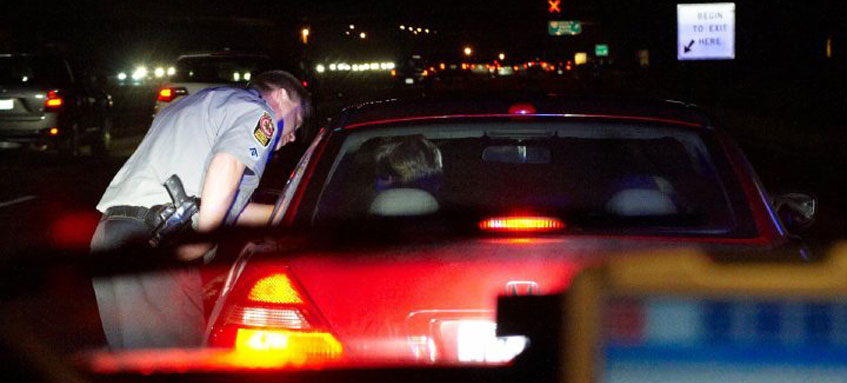
A DWI conviction in New York carries some of the harshest penalties in the country, and a charge out of West Seneca is no exception. Fines, a revoked license, a mandatory ignition interlock device, sharply higher insurance, and even jail are all on the table, and the stakes climb fast for higher blood-alcohol readings and repeat offenses. If you are facing a DWI in West Seneca, Sunil Bakshi and Joseph Leta bring more than 25 years of focused defense experience and regular appearances in West Seneca Town Court to your defense.
West Seneca is a large, densely populated Erie County suburb directly south and southeast of Buffalo, bordering Cheektowaga and Orchard Park. Its busy through-routes see steady traffic enforcement, and a single stop can put your license, your record, and your livelihood on the line. Understanding exactly what you are charged with, and what each charge can cost you, is the first step toward fighting back.
New York’s DWI charges and BAC tiers
New York grades drinking-and-driving offenses by blood-alcohol content and by the substance involved. Each tier carries its own exposure:
- DWAI (alcohol): a traffic infraction, not a crime, generally charged between 0.05% and 0.07% BAC. A first DWAI carries a fine of at least $300 and a 90-day license suspension, and it is often the goal of a favorable plea negotiation.
- DWI: a crime, charged at 0.08% BAC or higher, or on other evidence of intoxication. A first conviction means a fine of at least $500 and a revocation of at least six months.
- Aggravated DWI: a BAC of 0.18% or higher. A first conviction carries a minimum $1,000 fine and a one-year revocation.
- DWAI–Drugs and DWAI–Combination: impairment caused by drugs, or by drugs and alcohol together, with penalties that parallel the alcohol charges.
The tier matters because the consequences differ enormously. That is why one of the first things we do is scrutinize how your BAC was measured and whether the charge truly fits the evidence. For a deeper look at how these charges work, visit our DWI defense page.
Penalties for a West Seneca DWI conviction
The court-imposed sentence is only part of the story. A New York DWI conviction can mean all of the following:
- Fines and surcharges: statutory fines starting at $500 for a standard first DWI, plus mandatory state surcharges and crime-victim assessments on top.
- License revocation: a minimum six-month revocation for a first DWI, and a full year for Aggravated DWI, with reinstatement controlled by the DMV, not just the court.
- Ignition interlock: a device required on every vehicle you own or operate, at your own expense of roughly $75 or more per month.
- Jail: incarceration is a real possibility, and it rises steeply for high-BAC and repeat cases.
- Collateral costs: a permanent criminal record, higher insurance premiums, the Driver Responsibility Assessment, and possible problems with employment, professional licensing, and travel to Canada.
Leandra’s Law and when a DWI becomes a felony
Two situations turn a misdemeanor DWI into a felony and dramatically raise the stakes. The first is a prior conviction: a DWI committed within ten years of an earlier drinking-and-driving conviction is charged as a felony, exposing you to longer revocations, far larger fines, and the possibility of state prison. The second is Leandra’s Law, under which driving intoxicated with a child under the age of 16 in the vehicle is automatically a felony, even on a first offense, and triggers mandatory ignition-interlock and child-endangerment consequences.
Felony DWI cases arising in West Seneca are ultimately handled by Erie County Court in Buffalo, where the procedures and the exposure are more serious than in town court. Our experience defending felony charges across Erie County means you have counsel ready for that level of case from day one.
Where your case is heard in West Seneca
Which court your case lands in is one of the most important early questions, and the answer changes how the whole matter unfolds. Misdemeanor and traffic-level DWI charges that arise within the Town of West Seneca are heard in West Seneca Town Court. Town courts have their own routines, their own scheduling, and their own expectations, and walking in without a lawyer who knows those rhythms puts you at a real disadvantage. We know how the court approaches scheduling, motions, and plea negotiations, and we prepare accordingly.
If your charge is elevated to a felony, most commonly because of a prior drinking-and-driving conviction within the past ten years, the case moves up to Erie County Court in Buffalo. We appear in both the town court and the county court, so whichever direction your case takes, you have continuity of counsel from the first appearance through resolution.
Why so many stops happen in West Seneca
West Seneca is laced with high-volume roads that carry traffic between Buffalo and the southern towns, and those corridors see steady enforcement. A stop can begin on any of them:
- Interstate 90 (the New York State Thruway), which cuts across the northern edge of the area and funnels regional traffic through the town.
- Route 400 (the Aurora Expressway), the fast link toward East Aurora and the southern suburbs.
- Union Road, Seneca Street, Orchard Park Road, and Ridge Road (the busy surface arteries that tie West Seneca to Cheektowaga, Buffalo, and Orchard Park).
Commuters, visitors, and out-of-town drivers
Because those corridors connect so many neighboring towns, a large share of the drivers stopped here are commuters and visitors rather than residents. We regularly represent people who live in Hamburg, Orchard Park, Cheektowaga, or farther afield and were arrested in West Seneca on their way home. The rule is straightforward: the case is prosecuted where the stop occurred, so a West Seneca arrest means a West Seneca Town Court case no matter where you live, and whether you even knew you had crossed into West Seneca at the time makes no difference. For out-of-area and out-of-state drivers, we work to minimize the burden of repeated trips by appearing on your behalf wherever the law allows, and we keep you informed at every stage so distance never leaves you in the dark about your own case.
A town with deep local roots
West Seneca traces its origins to the German Ebenezer Society, a religious community that settled the area in the mid-1800s and gave the Ebenezer neighborhood its name. Today it is one of Erie County’s largest suburban communities, and that history is part of what makes the town a real place with a real community court, not an abstraction. When we represent you here, we are mindful that local courts value preparation, respect, and credibility, and we bring all three to every appearance.
Repeat offenses and escalating exposure
New York treats prior drinking-and-driving convictions as a multiplier on everything that follows. A second DWI within ten years is charged as a class E felony, and a third within that same window is a class D felony, each step adding longer mandatory revocation periods, steeper fines, a longer ignition-interlock requirement, and a far greater likelihood of incarceration. Prosecutors in Erie County take repeat cases seriously, and so do we: from the outset we examine whether a prior conviction can properly be used to elevate the current charge, because an improperly counted predicate can mean the difference between a misdemeanor and a felony.
High blood-alcohol readings raise the stakes in the same way. An Aggravated DWI at 0.18% or higher carries a longer revocation and a higher minimum fine than a standard DWI, and combined with a prior conviction the exposure compounds quickly. Whatever tier you are facing, the numbers on the paperwork are not the end of the conversation. They are the starting point for a defense.
The cost of refusing the chemical test
Many West Seneca drivers ask whether they should have refused the breath or blood test. Refusal carries its own price. A documented refusal triggers a separate civil revocation of at least one year imposed by the DMV (entirely apart from the criminal case, and applicable even if the underlying charge is later reduced or dismissed), along with a civil penalty. That revocation is decided at a DMV refusal hearing governed by its own rules and timelines, and it can attach regardless of what happens in West Seneca Town Court. A refusal also limits the conditional-license relief that is otherwise available, which is one reason the decision at the roadside has such lasting consequences. Because the administrative and criminal tracks run in parallel, both have to be defended, and we handle them together, making sure a deadline on the DMV side never quietly costs you your license while the court case is still being fought.
The first steps after a West Seneca DWI arrest
What you do in the hours and days after an arrest can shape the entire case. We tell every client the same things:
- Write down everything you remember about the stop while it is fresh: where it happened, what was said, and what tests you were asked to perform.
- Do not discuss the case with anyone except your attorney, and never assume a casual conversation is private.
- Gather your paperwork, including any tickets, the appearance ticket, and any DMV notices about your license.
- Call a lawyer right away. Your driving privileges are usually suspended at your very first court appearance, so the sooner we are involved, the more we can do.
What actually happens at your first West Seneca court date
For most people, a drinking-and-driving arrest is their first contact with the criminal justice system, and the fear of the unknown is often worse than the reality once it is explained. Your first appearance in West Seneca Town Court is the arraignment. There the charges are formally read, the court addresses your driving privileges, usually suspending your license pending prosecution, and your case is adjourned to a later date so the defense can begin. You do not resolve anything at arraignment, and you should never feel pressured to plead guilty simply to make the night’s events go away. With counsel at your side, we can argue for the return of limited driving privileges, obtain the prosecution’s paperwork, and set the case on a path toward the best achievable outcome. Knowing what to expect, and having someone speak for you, turns an intimidating courtroom into a manageable process.
How Bakshi & Leta fight a DWI charge
A strong defense starts with the details. Field sobriety tests and chemical tests are frequently the heart of the prosecution’s case, and both can be challenged. We examine whether the initial stop was lawful, whether the roadside tests were properly administered, and whether the breath or blood instrument was correctly calibrated, maintained, and operated by a certified technician. Roadside tests are subjective by nature and are often given incorrectly, and any deviation can undercut the prosecution’s case. We review every record for the kind of error that changes an outcome. Where the evidence supports it, we negotiate to reduce a DWI to a non-criminal DWAI; where it does not, we are prepared to litigate.
We also move quickly to protect your ability to drive. Your license is typically suspended at arraignment, but we can frequently secure hardship privileges and a conditional license so you can keep getting to work, school, and medical appointments. If you declined the chemical test, a separate one-year revocation can attach through a DMV refusal proceeding. See our DMV hearings page for how those are handled.
Serving West Seneca and all of Western New York
We defend drinking-and-driving charges in town, village, and county courts throughout Erie County and the surrounding region, and wherever your case is heard, you get the same preparation and the same continuity of counsel. To see every community and court where we appear, visit our areas we serve page.
The penalties for a West Seneca DWI are severe, but they are not automatic; an experienced advocate can change the outcome. Call Bakshi & Leta today at (716) 631-0004 for a free, confidential consultation.
New York sets several tiers. DWAI (alcohol) is a traffic infraction generally charged between 0.05% and 0.07% BAC. DWI is a crime at 0.08% or higher. Aggravated DWI applies at 0.18% or higher. Separate DWAI–Drugs and DWAI–Combination charges cover impairment by drugs or by drugs and alcohol together.
A first DWI conviction in New York generally carries a fine of at least $500, a mandatory license revocation of at least six months, and the required installation of an ignition interlock device on any vehicle you own or operate. Aggravated DWI raises the minimum fine to $1,000 and the revocation to one year. Jail is possible, and surcharges and program fees add to the cost.
A DWI becomes a felony when you have a prior DWI conviction within the past ten years, or under Leandra’s Law when a child under 16 is in the vehicle. Felony DWI cases from West Seneca are ultimately handled by Erie County Court in Buffalo and carry the possibility of state prison, much longer revocations, and larger fines.
New York requires an ignition interlock device on every vehicle you own or operate following a DWI conviction, at your own expense of roughly $75 or more per month. The device requires a breath sample before the engine will start, and the requirement applies for a set period even after your driving privileges are restored.
Misdemeanor and traffic-level drinking-and-driving cases arising in the Town of West Seneca are heard in West Seneca Town Court. If the matter is charged as a felony, such as a repeat offense within ten years, it is ultimately handled by Erie County Court in Buffalo. We appear in both, so you have continuity of counsel whichever direction your case takes.
Write down everything you remember about the stop, gather your tickets and any DMV notices, do not discuss the case with anyone but your attorney, and call a lawyer right away. Your license is usually suspended at your first court appearance, so acting quickly lets us seek a conditional license and protect your rights before that hearing.
Your license is typically suspended at arraignment, but we can frequently obtain hardship privileges and a conditional license so you can keep driving to work, school, and medical appointments while your case moves through West Seneca Town Court. A chemical-test refusal is handled separately by the DMV and carries its own revocation.
Facing a DWI in West Seneca? Call now.
With fines, revocation, and possible jail on the line, the sooner you call, the more we can do to protect your license and your record. Free, confidential consultation.