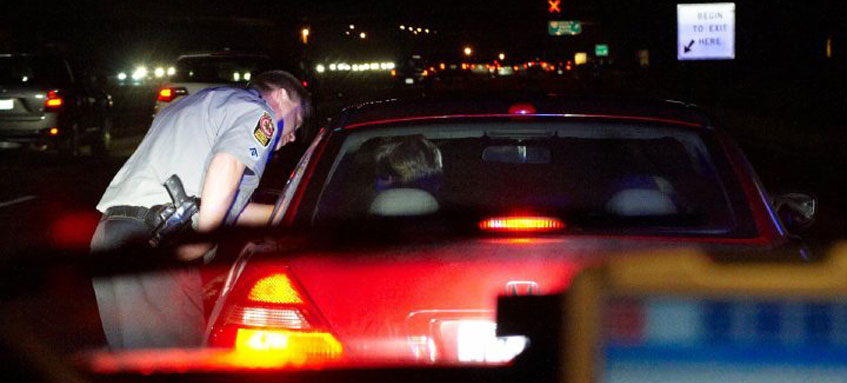
A DWI charge in Clarence is a criminal matter with real and lasting consequences, not a simple traffic ticket you can pay and forget. New York’s drinking-and-driving laws are among the toughest in the nation, and the difference between a strong defense and a costly mistake often comes down to how quickly and how skillfully your case is handled. For more than 25 years, Sunil Bakshi and Joseph Leta have defended DWI charges for drivers throughout the Town of Clarence and across Western New York, and we know exactly what is at stake.
Clarence is one of Erie County’s most affluent, established communities, a leafy, largely suburban and rural town in the eastern part of the county, spread across the hamlets of Clarence, Clarence Center, and Harris Hill and bordered by Amherst, Newstead, and Lancaster. Its residents tend to be professionals, business owners, and longtime homeowners, people for whom a criminal conviction can carry consequences far beyond the courtroom. Most of the clients who call us have never been in any trouble before, and a single roadside stop should not be allowed to undo a lifetime of hard work. That is precisely why a DWI in Clarence deserves a serious, well-prepared defense from the very first day.
How New York grades a DWI by BAC
Unlike many states, New York ties its charges directly to your blood-alcohol content (BAC) and the specific facts of the stop. Understanding which tier you fall into is essential, because each one carries different exposure:
- DWAI (0.05% – 0.07% BAC): Driving While Ability Impaired by alcohol is a traffic infraction rather than a crime. It carries a minimum fine of $300 and a 90-day license suspension, and reducing a DWI to a DWAI is frequently a key defense objective.
- DWI (0.08% BAC or higher): Driving While Intoxicated is a crime. A first conviction carries a minimum fine of $500 and a minimum six-month license revocation, along with a permanent criminal record.
- Aggravated DWI (0.18% BAC or higher): a more serious crime carrying a minimum fine of $1,000 and a one-year revocation.
- DWI–Drugs: driving while impaired by drugs rather than alcohol, with a mandatory minimum six-month revocation and a fine of at least $500.
Repeat offenses within ten years can be charged as felonies, with dramatically harsher penalties including longer revocations, far larger fines, and possible jail or state prison. A child in the vehicle triggers Leandra’s Law, which elevates the charge to a felony as well.
Pinning down exactly which of these you are facing is the first thing we sort out when you call, because the label on your ticket controls everything that follows. If you want the full breakdown of how each charge and its penalties work, our DWI defense page lays it out in detail.
The penalties that follow a Clarence DWI conviction
The statutory fines are only the beginning. New York requires an ignition interlock device on every vehicle registered in your name, at your own expense of roughly $75 or more per month, even while your privileges are revoked. A conviction also brings sharply higher insurance costs, mandatory surcharges, possible jail exposure, and a criminal record that can surface in background checks for years. For a Clarence professional, that record can threaten a professional license or a security clearance and complicate employment and travel into nearby Canada. These are the stakes we work to keep off your future.
It is worth being candid about why these stakes hit communities like Clarence especially hard. This is a town of professionals, business owners, and families who have spent years building reputations and careers, and a conviction touches all of it at once: the commute, the household’s insurance rates, an employer’s background check, and in some fields a license or clearance that took years to earn. We have seen how much a single charge can put at risk, and that is exactly the perspective we bring to the work: treating your case not as a routine file, but as the threat to your livelihood that it genuinely is.
The Clarence traffic stop: what usually happens
Clarence covers a lot of ground, and stops can happen anywhere: the busy commercial stretch of Transit Road (Route 78), Main Street (Route 5) through the village, Sheridan Drive near the Amherst line, or quieter rural roads such as Goodrich Road out toward Clarence Center. Many stops begin with something minor, such as a brake light, a wide turn, drifting within a lane, or a checkpoint, and from there the encounter tends to follow a familiar pattern.
Roadside questioning
An officer may ask whether you have been drinking and where you are coming from. You are not required to answer questions that incriminate you, and politely declining is your right. Anything you say at the roadside can become evidence, and it frequently does.
Field sobriety tests
You may be asked to perform balance and coordination exercises: the walk-and-turn, the one-leg stand, and an eye test called horizontal gaze nystagmus. These are voluntary, highly subjective, and easily affected by nerves, footwear, uneven pavement, a medical condition, or the cold Western New York weather. We examine closely whether each one was administered the way the training manuals require.
The portable breath test is not the official test
The small handheld device sometimes offered at the roadside is not the same as the official chemical test administered later at the station, and the two carry very different weight in court. Sorting out which reading the prosecution is actually relying on is an early priority, and it leads straight to the part of the case where most DWI defenses are won or lost.
The chemical and breath test: the heart of the case
In most DWI prosecutions, the chemical test result is the centerpiece of the government’s case, which also makes it one of the most fertile areas for a defense. A breath, blood, or urine result is only as reliable as the equipment and the procedure behind it.
Calibration and maintenance
Breath-testing instruments must be regularly calibrated and maintained. We obtain the maintenance and calibration records and review them for any gap or error that could render a reading unreliable.
Operator certification and protocol
The test must be administered by a certified operator following a strict protocol, including a required observation period. A deviation from that protocol can call the entire result into question.
The lawfulness of the stop
Before any test, the officer needed a lawful reason to pull you over and probable cause to arrest. If the stop was not legally justified, everything that flowed from it (the observations, the field tests, and the reading itself) may be challenged and potentially suppressed.
Refusals and the DMV refusal hearing
If you refused the official chemical test, you face a separate proceeding entirely apart from the criminal charge: a DMV refusal hearing. A knowing refusal carries its own mandatory one-year license revocation, even if you ultimately win or the criminal case is reduced. These hearings are scheduled quickly and follow their own rules and personnel. We have appeared at hundreds of them and know the process intimately; you can read more on our DMV hearings page.
What happens after a Clarence arrest
If you have never been through this before, the uncertainty itself can be the hardest part: the not knowing what comes next or how long it will take. So here is the short version of what typically follows a Clarence arrest: you are released, usually with an appearance ticket or after arraignment; your driving privileges are suspended pending prosecution; and the case is then set down for future court dates while your attorney gathers the evidence and the records. It is rarely resolved in a single appearance, and that is normal rather than a sign that something has gone wrong. Knowing the rhythm of the process ahead of time takes a great deal of the fear out of it, and it is one of the first things we walk you through when you call.
Keeping you on the road while we fight
At your first court appearance, the court will typically suspend your license. In a town as large and car-dependent as Clarence, where the commute to Buffalo, Amherst, or beyond is a daily reality, losing the ability to drive can be devastating. The good news is that by getting involved early, we can move to secure hardship privileges and then a conditional license, keeping you on the road to work, school, and medical appointments while your case proceeds. From arraignment through motions, hearings, plea negotiations, and trial if it comes to that, we manage every stage and keep you informed throughout.
How Bakshi & Leta build your DWI defense
No two DWI cases are identical, and a real defense begins with a careful, top-to-bottom review of how the government built its case against you. From the moment you retain us, we work methodically through the evidence looking for the weaknesses that prosecutors hope you will never notice:
- The basis for the stop: Did the officer have a lawful, articulable reason to pull you over in the first place? An unjustified stop can taint everything that followed.
- Probable cause to arrest: We assess whether the observations and tests actually supported an arrest, or whether the officer leapt to a conclusion.
- The reliability of the readings: Calibration logs, maintenance records, operator certification, and the observation period all get scrutinized for error.
- Procedural and constitutional issues: Improper questioning, missing warnings, or gaps in the paperwork can open the door to suppression of evidence.
Where the facts support it, we file motions to challenge or suppress evidence, and we negotiate from a position of strength, frequently aiming to reduce a DWI to a non-criminal DWAI, to limit the collateral damage, or to resolve the matter without the trial that clients dread. When trial is the right call, we are fully prepared to take it there. Throughout, we explain each decision in plain language so you always understand your options and the trade-offs.
Where your Clarence DWI is heard
A misdemeanor DWI or DWAI arising in the Town of Clarence is generally handled in Clarence Town Court, while felony-level charges move to Erie County Court in downtown Buffalo. Each court has its own judges, procedures, and expectations, and drinking-and-driving cases are won or lost court by court, which makes day-to-day familiarity a genuine advantage. Knowing the courts across Erie County and the surrounding towns of Amherst, Newstead, and Lancaster lets us resolve cases efficiently and cost-effectively, often without the drawn-out fight that clients fear most. Our office is on Main Street in Williamsville, minutes from Clarence, Clarence Center, and Harris Hill, and we serve drivers throughout the region; see the full list on our areas we serve page.
A Clarence stop also tends to involve more than the impaired-driving charge alone. Many clients face related tickets for speeding or other moving violations arising out of the same encounter, each carrying points and insurance consequences of its own. We handle the whole picture, and you can learn more about that on our speeding & traffic violations page.
A DWI conviction can follow you for years, but an experienced defense from the outset can change the outcome, protecting your license, your record, and your livelihood. If you have been charged with DWI anywhere in Clarence or Western New York, call Bakshi & Leta today at (716) 631-0004 for a free, confidential consultation.
Clarence DWI questions
Frequently asked questions
Call (716) 631-0004 for answers specific to your case.
DWI is generally charged at 0.08% BAC or higher. A BAC between 0.05% and 0.07% can support a DWAI, and 0.18% or higher is charged as Aggravated DWI with the harshest penalties. The exact charge in your Clarence case depends on your readings and the circumstances of the stop.
A first DWI is generally a misdemeanor with a minimum $500 fine, a minimum six-month revocation, a mandatory ignition interlock device, and a permanent criminal record. Aggravated DWI raises the minimum fine to $1,000 with a one-year revocation, and repeat offenses within ten years can be felonies.
Refusing the official chemical test triggers a separate DMV refusal hearing and a mandatory one-year revocation that applies even if your criminal case is later reduced or dismissed. These hearings move quickly and have their own rules. We have handled hundreds of them and act fast to protect your driving privileges.
Often, yes. Your license is usually suspended at arraignment, but we can frequently obtain hardship privileges and later a conditional license so you can keep getting to work, school, and medical appointments. In a spread-out town like Clarence this is critical, which is why acting quickly matters.
A misdemeanor DWI or DWAI arrest in the Town of Clarence is typically handled in Clarence Town Court, while felony-level charges move to Erie County Court in downtown Buffalo. Each court has its own judges, procedures, and expectations. We regularly appear throughout Erie County and tailor our approach to the specific court handling your case.
Stay calm, be polite, and avoid volunteering information or arguing at the roadside. Whatever you say and do is being observed and may be recorded. As soon as you are able, contact a local DWI lawyer. Early action gives us the best chance to protect your license, preserve evidence, and pursue hardship driving privileges while the case is pending.
Drinking-and-driving cases are decided court by court, and familiarity matters. Bakshi & Leta are based on Main Street in Williamsville, minutes from Clarence, with more than 25 years of focused DWI experience across Western New York. We know how local courts handle these cases and how to resolve them efficiently while protecting your record and your livelihood.
Charged with DWI in Clarence? Call now.
The sooner you call, the more we can do to protect your license and your record. Free, confidential consultation for Clarence and all of Western New York.