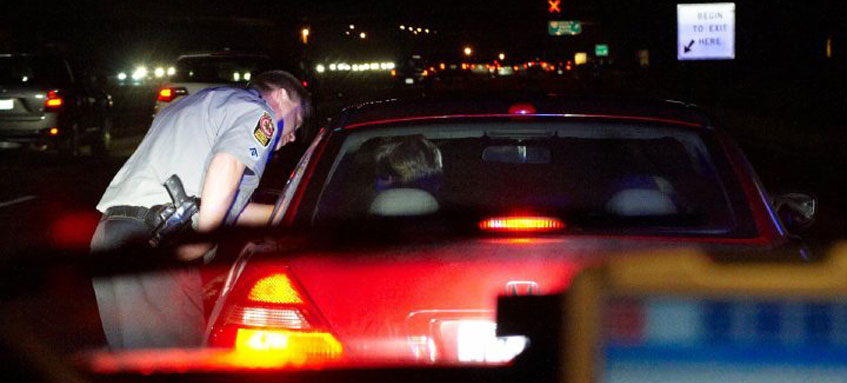
A DWI conviction in New York triggers a cascade of penalties that can reshape your finances, your driving privileges, and your record for years, and in Orchard Park the stakes climb quickly once a charge is filed. If you have been arrested in the Town of Orchard Park, Sunil Bakshi and Joseph Leta are experienced DWI defense attorneys who understand exactly what each level of charge carries and how to fight to keep the consequences as small as possible.
New York’s impaired-driving statutes are among the toughest in the nation, and they are built around blood-alcohol content tiers. The number on the breath test largely determines the charge, the mandatory minimums, and how much room there is to negotiate. Below we walk through the BAC tiers, the penalties attached to each, the point at which a DWI becomes a felony, the court that will hear your case and how it moves through that court, what game-day enforcement around Highmark Stadium means for drivers in Orchard Park, and the first steps to take after an arrest.
The BAC tiers behind a New York DWI
Unlike states that lump every offense under one label, New York grades impaired driving by blood-alcohol content and by what you were impaired by. The tier dictates almost everything that follows:
- DWAI-Alcohol, 0.05% to 0.07% BAC: a traffic infraction rather than a crime, and frequently the target of a favorable plea on a borderline reading.
- DWI, 0.08% BAC or higher: the standard misdemeanor crime, and the charge most Orchard Park arrests are booked under.
- Aggravated DWI, 0.18% BAC or higher: a high-BAC crime carrying the steepest first-offense penalties.
- DWAI-Drugs and DWAI-Combination: impairment by a drug, or by drugs and alcohol together, proven without any breath number at all.
Penalties for a first-offense DWI
Even a first DWI in Orchard Park is a misdemeanor with mandatory consequences that are set by statute, not left to chance:
- Fines: a minimum of $500 for a standard DWI, rising to a minimum of $1,000 for Aggravated DWI, before the separate mandatory state surcharge.
- License revocation: at least six months for DWI, and at least one year for Aggravated DWI. A revocation means your license is canceled, not merely suspended.
- Ignition interlock: New York requires an ignition interlock device on every vehicle you own or operate, typically for at least one year, installed and maintained at your own expense.
- Jail: incarceration is possible even on a first misdemeanor DWI, and more likely as the BAC and aggravating factors rise.
- Criminal record: a DWI conviction is a permanent criminal record that can affect employment, professional licenses, insurance rates, and travel to Canada.
A DWAI-Alcohol infraction carries lighter exposure (a minimum $300 fine and a 90-day suspension), which is one reason reducing a DWI to a DWAI is often a central goal of the defense. For the full statewide breakdown of charges and penalties, see our DWI defense overview.
When a DWI becomes a felony
The single biggest jump in exposure comes when a DWI is charged as a felony. In New York that happens when you have a prior DWI or Aggravated DWI conviction within the past ten years, turning a second offense into a Class E felony and a third into a Class D felony, with sharply higher fines, longer revocations, and the real possibility of state prison.
A DWI also becomes a felony under Leandra’s Law whenever a child under the age of 16 is a passenger, even on a first offense. Leandra’s Law also makes the ignition interlock requirement mandatory. Felony DWI cases arising in Orchard Park are not resolved in town court; they are presented to a grand jury and prosecuted in Erie County Court in downtown Buffalo, where the stakes and the procedures are more demanding.
Where your Orchard Park case is heard
Orchard Park is a suburb in southern Erie County, and a drinking-and-driving arrest within the town is prosecuted in Orchard Park Town Court, one of New York’s local town justice courts. An arrest inside the Village of Orchard Park is handled by the village court. That local court is where your arraignment, conferences, motions, and any hearings on a misdemeanor DWI or a DWAI will take place. Town and village courts have their own rhythms and expectations, and an attorney who regularly appears in the courts of Erie County understands how a particular court tends to handle plea discussions, conditional licenses, and scheduling.
Knowing in advance which track your case is on (the local court or, on a felony, Erie County Court in Buffalo) lets us prepare the right defense from day one rather than scrambling later.
Game-day enforcement around Highmark Stadium
Orchard Park is the home of Highmark Stadium, where the Buffalo Bills play, and Bills home games are tightly tied to the town’s DWI enforcement. Game days bring tailgating and enormous crowds, and police are well known to increase DWI patrols and to operate sobriety checkpoints on the roads carrying fans away from the stadium: Abbott Road, Southwestern Boulevard (Route 20), Big Tree Road (Route 20A), Milestrip Road, and Route 240.
Because alcohol leaves the body slowly, a driver who stopped drinking before the fourth quarter can still test over the limit in the parking-lot exodus afterward. Checkpoint arrests carry their own legal questions (whether the checkpoint was conducted under a valid, neutral plan and properly publicized), and those questions can become important leverage. We scrutinize the stop, the roadside testing, and the breath instrument’s calibration and maintenance records for any flaw that undercuts the charge or the BAC reading driving the penalties.
The costs that outlast the sentence
The fine the judge announces is only the beginning of what a DWI actually costs. New York adds a mandatory state surcharge on top of any fine, and the state imposes a separate Driver Responsibility Assessment, a multi-year fee billed directly by the DMV that has nothing to do with the court. The ignition interlock device brings its own installation and monthly monitoring charges, paid out of pocket for the length of the requirement, and any missed or failed test can extend the term or trigger a violation.
Beyond the government’s charges, a conviction routinely drives up auto insurance premiums for years or leads an insurer to drop coverage altogether. A permanent criminal record can surface in background checks for jobs and professional licenses, and a DWI can complicate or bar travel to Canada, a real consideration so close to the border. Commercial drivers face the added blow of nationwide CDL reporting. When we evaluate a case, we weigh all of these downstream costs, because reducing a DWI to a DWAI or avoiding a conviction entirely can save far more than the headline fine.
The license fight runs on a separate track
One of the harshest features of a New York DWI is that your driving privileges are attacked from two directions. In town court the judge typically suspends your license at arraignment. Separately, if you refused the chemical breath test, the DMV pursues a refusal hearing that can revoke your license for a year on its own, regardless of how the criminal case turns out. We handle both fronts and move early to secure a hardship privilege and a conditional license so you can keep driving to work, school, and medical care. Our DMV hearings page explains that process in detail.
How an Orchard Park case moves through court
Understanding the road ahead takes some of the fear out of a first arrest. A typical Orchard Park case begins with an arraignment, where the charges are formally read, a suspension of your license is usually imposed, and the question of a conditional license first comes up. From there the case moves through conferences in which your attorney and the prosecutor discuss the evidence and any possible reduction, followed by pre-trial motions that can challenge the legality of the stop, the admissibility of statements, or the reliability of the chemical test.
If a critical issue is in dispute, the court may hold a suppression hearing before any trial, and the outcome of that hearing often shapes whether a case is reduced, dismissed, or set for trial. Most cases never reach a jury, but having a lawyer who is ready to try the case is part of what gives a reduction its leverage. Throughout the process, the consistency of the local court’s personnel and procedures rewards an attorney who appears there regularly and knows what that court expects at each stage.
Defending Orchard Park DWI charges
Because the penalties are so heavily tied to the BAC tier, much of our work focuses on the strength of the prosecution’s proof: the basis for the stop, the administration of field sobriety tests, and the reliability of the chemical test. Where the evidence is vulnerable, that pressure can mean a reduction to a DWAI, a dismissal of a count, or a more favorable disposition. Where it is strong, our familiarity with Orchard Park Town Court and the courts of Erie County helps us pursue the best available outcome and the lightest sentence the law allows. We also look closely at the mandatory minimums attached to each charge, because the gap between a DWI and a reduced DWAI can mean the difference between a permanent criminal record and a traffic infraction, and between a year of interlock and none at all. From the first appearance through sentencing, our goal is to keep your exposure (financial, professional, and personal) as low as the facts and the statute permit.
First steps after an Orchard Park arrest
The hours and days after an arrest matter. Write down everything you can remember about the stop, the checkpoint, and the testing while it is fresh. Do not discuss the case with anyone other than your lawyer, and do not post about it. Most importantly, call an attorney quickly. Because your license is typically suspended at arraignment, reaching out early lets us move to secure a hardship privilege and then a conditional license so you can keep getting to work, school, and medical appointments while your case is pending.
From your first court date through resolution, we handle the arraignment, the motions, any hearings, plea negotiations, and trial if it comes to that. We also keep you informed at every turn, so you always understand what is happening and why.
Serving Orchard Park and Western New York
Bakshi & Leta defend DWI clients throughout southern Erie County and Western New York, including Orchard Park, Hamburg, West Seneca, East Aurora, Boston, and the surrounding town and village courts, appearing in Orchard Park Town Court and, on felonies, in Erie County Court in Buffalo. We appear where your case is heard. See every community we cover on our areas we serve page.
New York’s DWI penalties escalate fast, and the difference between a DWI and a DWAI, or a misdemeanor and a felony, can change your life. Put experienced defense between you and those consequences. Call Bakshi & Leta today at (716) 631-0004 for a free, confidential consultation.
New York charges DWAI-Alcohol between 0.05% and 0.07% BAC, DWI at 0.08% or higher, and Aggravated DWI at 0.18% or higher. There are also DWAI-Drugs and DWAI-Combination charges for impairment by drugs or by drugs and alcohol together, which do not depend on a breath number.
A first-offense DWI is a misdemeanor that carries a fine of at least $500, a license revocation of at least six months, and a mandatory ignition interlock device on any vehicle you own or operate. Aggravated DWI raises the minimum fine to $1,000 and the revocation to one year. Jail is possible, and a conviction becomes a permanent criminal record.
A DWI is charged as a felony if you have a prior DWI or Aggravated DWI conviction within the past ten years, or where Leandra’s Law applies because a child under 16 was in the vehicle. Felony DWI cases in Orchard Park are prosecuted in Erie County Court in Buffalo and carry the possibility of state prison.
A misdemeanor DWI or a DWAI arrest in the Town of Orchard Park is heard in Orchard Park Town Court, a local town justice court, and an arrest within the Village of Orchard Park is handled by the village court. If the charge is elevated to a felony, the case is presented to a grand jury and prosecuted in Erie County Court in downtown Buffalo.
Yes. Orchard Park is home to Highmark Stadium, where the Buffalo Bills play, and police are known to increase DWI patrols and run sobriety checkpoints on Bills game days along the routes leaving the stadium, such as Abbott Road, Southwestern Boulevard (Route 20), Big Tree Road (Route 20A), Milestrip Road, and Route 240.
Write down everything you remember, do not discuss the case with anyone but your attorney, and call a lawyer right away. Your license is usually suspended at arraignment, so acting quickly lets us seek a hardship privilege and a conditional license. Call Bakshi & Leta at (716) 631-0004 for a free, confidential consultation.
Charged with DWI in Orchard Park? Call now.
From the BAC tier to the interlock and the revocation, every detail shapes your outcome. The sooner you call, the more we can do. Free, confidential consultation.