For Bakshi & Leta, the Clarence Town Court is practically a court down the road. Our office sits on Main Street in Williamsville, the next community over, and we appear in Clarence’s town justice court regularly. So if your DWI case is headed there, you are working with attorneys who already know how that courtroom runs, and who can be at your side from the very first appearance.
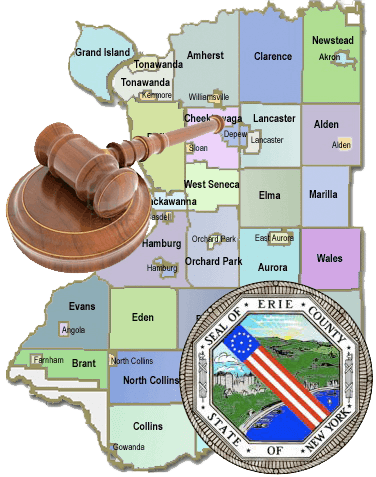
Clarence is a growing, affluent suburb in the northeast corner of Erie County, known for its historic Main Street corridor, its antique district, and the busy commercial stretch of Transit Road. It is also a town with a lot of cars on the move, and a DWI charge here travels through a local justice court that, while smaller than a city court, applies the same demanding New York drunk-driving laws as everywhere else in the state.
Local roads, local enforcement in Clarence
Driving in Clarence means moving along a handful of major arteries, and that is where DWI enforcement tends to concentrate. Main Street, Route 5, runs the length of the town through Clarence Hollow and past the antique shops and Main Street businesses that draw weekend visitors. Transit Road, Route 78, is one of the busiest commercial corridors in Western New York, lined with restaurants, shops, and plazas that keep traffic heavy into the evening. Sheridan Drive carries east-west commuter traffic across the southern part of town, and Goodrich Road threads through the quieter residential and rural stretches. Each of these roads sees the kind of late-evening traffic where patrols watch for impaired driving.
A stop on any of them tends to begin with something small: a turn taken wide leaving a Transit Road plaza, a brake light out on Main Street, a drift across the center line on a darker stretch of Goodrich. From that first moment, the officer’s observations, the roadside field sobriety tests, and the chemical breath or blood test become the building blocks of the case against you. Every one of those steps is governed by rules, and every one is an opening where a careful defense can push back.
How the Clarence Town Court handles a DWI
Under New York’s justice-court system, the Town of Clarence operates its own town court with authority to hear misdemeanor DWI charges along with other criminal and traffic matters. It is a local court presided over by a town justice, and it serves the entire town, including the Clarence Hollow and Clarence Center areas. Compared with a busy city court, a town court like Clarence’s typically sits on a more contained calendar, which means the rhythm of a case is set by how often the court meets and how its docket is managed.
As with every justice court in the region, where you were physically stopped controls which court hears your case. A stop within the Town of Clarence is filed in the Clarence Town Court, while a stop just across a town line, into Amherst, Newstead, or Lancaster, for instance, may be heard somewhere else entirely. Because those boundaries are not obvious from the road, confirming the correct court is one of the first things we lock down for every client.
Your first appearance and your license
A DWI case opens with the arraignment, the first court date, where the charges are read aloud and the court turns immediately to your driving privileges. In most DWI cases those privileges are suspended right there at arraignment. That is why speed matters so much: we move to obtain hardship privileges and, where you are eligible, a conditional license, so you can still drive to work, school, and medical appointments while the case is pending. In a spread-out suburb like Clarence, where daily life runs along Transit Road and Main Street, keeping you legally on the road is often an urgent first priority.
After arraignment, a Clarence case follows the same path as any New York DWI: the exchange of discovery, pretrial motions challenging the legality of the stop or the reliability of the testing, conferences with the prosecution, and, if a fair resolution cannot be reached, a hearing or trial. Because our office is so close, we can stay closely engaged with a Clarence case and respond quickly as it develops.
What is really at stake: penalties and your record
It is easy to underestimate how far a DWI conviction reaches. Beyond the fines and the mandatory state surcharge, a conviction can carry the possibility of jail, a revocation of your driving privileges, required participation in the Impaired Driver Program, and, in most DWI cases, installation of an ignition interlock device on any vehicle you own or drive. The Department of Motor Vehicles layers on its own penalties (driver-responsibility assessments and longer revocations for repeat offenses) entirely apart from whatever happens in the Clarence Town Court. For many of our Clarence clients, the professional and personal fallout of a criminal record weighs just as heavily as the court’s sentence, which is why securing the best possible outcome, ideally a reduction that avoids a criminal conviction altogether, is always the goal.
Looking closely at the evidence
A DWI charge is the prosecution’s opening position, not the last word. Every charge rests on a sequence of steps, and each one has to satisfy the rules to count against you. The legality of the stop comes first: an officer needs a real, articulable reason to pull a driver over on Transit Road or Main Street, and a stop that does not meet that standard can be contested. The roadside field sobriety tests come next, and they are far more fragile than they appear; performed on uneven pavement, in poor weather, or with imprecise instructions, they can produce results that say more about the conditions than about impairment.
Then there is the chemical test, which carries its own set of requirements. The instrument has to be properly calibrated and maintained, the operator certified, and the observation period observed before a sample is taken; medical issues and timing can distort a reading as well. We obtain and examine the underlying records in every case, because a breath or blood number that looks conclusive on paper sometimes rests on a procedure that fell short. Those weaknesses are what create room to suppress evidence, reduce a charge, or negotiate from real strength.
The charges the Clarence court actually hears
New York charges Driving While Intoxicated (DWI), a crime generally brought at a blood-alcohol content of 0.08% or higher, and Driving While Ability Impaired (DWAI), a traffic infraction typically charged between 0.05% and 0.07%. A BAC of 0.18% or higher is charged as Aggravated DWI, which carries stiffer penalties, while impairment by drugs is charged as DWAI–Drugs. Those distinctions are not just terminology. A reduction from a DWI to a DWAI can be the difference between carrying a criminal conviction and resolving the matter as a traffic infraction, and working toward that kind of outcome in the Clarence Town Court is very often the heart of the defense.
A neighborhood firm in the Clarence court
Being based next door is more than a convenience. Appearing in the Clarence Town Court on a regular basis means we are familiar with how the court runs its calendar, how its prosecutors approach a close case, and what the court expects from the parties before it. Sunil Bakshi and Joseph Leta have built their practice in the town, village, and city courts of Erie County over many years, and Clarence is squarely within the home territory we know best.
Throughout it all, we keep you informed. From the day after your arrest, we explain what each step means, what the court is likely to do next, and what your realistic options are. Facing a DWI is stressful enough without being left in the dark about your own case, and with our office just minutes away, you are never far from a straight answer.
Clarence court questions
Frequently asked questions
Call (716) 631-0004 for answers specific to your case.
A DWI charged within the Town of Clarence is handled by the Clarence Town Justice Court, which serves the whole town including the Clarence Hollow and Clarence Center areas. Our office is in neighboring Williamsville, so we appear in the Clarence Town Court regularly and can be there for you from the first appearance forward.
Yes. Our office at 5662 Main St. in Williamsville sits just minutes from Clarence, and we practice in the Clarence Town Court routinely. That proximity means we know the court’s customary calendar and routine, and we can meet with you and respond quickly to developments in your case.
DWI (Driving While Intoxicated) is a crime generally charged at 0.08% BAC or higher. DWAI (Driving While Ability Impaired by alcohol) is a traffic infraction typically charged between 0.05% and 0.07%, and a BAC of 0.18% or higher is charged as Aggravated DWI. The distinction matters in Clarence Town Court, because a reduction from DWI to DWAI can mean the difference between a crime and a traffic infraction.
In a DWI case the court commonly suspends your driving privileges at arraignment, which is the first appearance. We move quickly to seek hardship privileges and, where you qualify, a conditional license so you can keep driving to work, school, and medical appointments along Transit Road, Main Street, and the rest of your routine while the case is pending.
DWI case in Clarence Town Court? Call now.
The sooner you call, the more we can do to protect your license and your record. Free, confidential consultation.