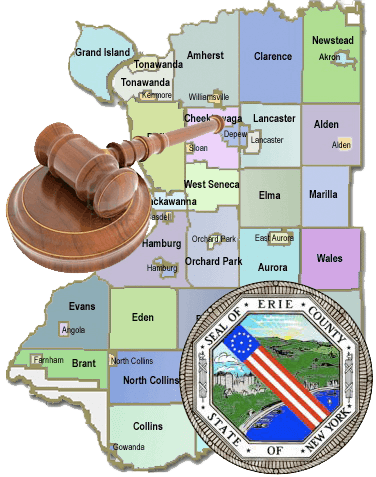
When a DWI charge is set down for the Collins Town Court, your case is headed to the far southern edge of Erie County, a rural town court close to the Cattaraugus County line and the Village of Gowanda. That location carries practical consequences for how your case is handled, and at Bakshi & Leta we have spent decades navigating the small justice courts of Western New York, learning how each one runs a DWI from arraignment to resolution.
Collins is farm country. Open fields, long rural roads, and scattered hamlets define the town, and its justice court is built to handle the local caseload that comes with that landscape. If a traffic stop somewhere along these southern roads has put a DWI on your record, the smartest first move is to understand the court that now holds your case, and how an experienced defense can change its trajectory.
The Collins Town Court and the New York justice system
Across New York, towns are empowered to operate their own justice courts, and those courts routinely handle misdemeanor DWI charges. The Collins Town Court is one of them. An elected town justice presides, and the court keeps a part-time calendar rather than the daily, high-volume schedule of a city court. In real terms, that often means your appearances are spread further apart, and the journey through arraignment, discovery, motions, and disposition can take longer to complete, a reality that rewards counsel who actively keeps the case moving.
Collins also sits in a corner of the map where boundaries get complicated. The town borders the Village of Gowanda, and Gowanda itself spans the Erie–Cattaraugus county line. A stop a short distance in one direction or another can determine not only which court hears the case but, in some instances, which county. Sorting that out at the outset is essential, and it is one of the first questions we resolve so your case is answered in the correct courtroom from day one.
Route 39, Main Street, and rural enforcement
The roads of Collins set the stage for how DWI enforcement happens here. Route 39 is the principal east–west route, running across open farmland and connecting Collins to Gowanda and the communities beyond. Main Street carries the town’s local traffic. These are roads where speeds tend to be higher and the stretches between towns are long and dark, with little ambient light once the sun goes down. On a road like that, a modest speed variance, a wide turn at an intersection, or a late-night drift toward the shoulder can be all it takes for an officer to pull a driver over.
Once a stop is underway, the officer’s account of your driving, the field sobriety tests conducted at the roadside, and any breath or blood result become the foundation of the prosecution’s case. None of those pieces is beyond challenge. Each is bound by procedural and scientific rules, and a thorough defense scrutinizes whether the stop was justified, whether the tests were administered properly, and whether the chemical results can truly be relied upon.
How New York charges drunk driving
New York’s statutes are precise about what a drunk driving case is called and how it is graded. The state charges Driving While Intoxicated (DWI), a crime generally brought at a blood-alcohol content of 0.08% or higher, and Driving While Ability Impaired (DWAI), a traffic infraction typically charged between 0.05% and 0.07%. A result of 0.18% or above is elevated to Aggravated DWI with stiffer penalties, and impairment by drugs is charged as DWAI–Drugs. These categories carry real weight: a reduction from a DWI to a DWAI can transform a criminal conviction into a mere traffic infraction, and pressing toward that kind of result is often where the defense does its most important work.
Inside a Collins DWI case, step by step
It begins at arraignment. The charges are read, and the court immediately addresses your license: in most DWI cases, your driving privileges are suspended right there. In a rural town like Collins, where driving is a daily necessity and public transit is not a real option, that suspension bites hard. We act fast to seek hardship privileges and, where you are eligible, a conditional license, so you can keep getting to work, to school, and to medical care while the case proceeds.
After arraignment, a Collins case follows the familiar arc of any New York DWI: discovery is exchanged, pretrial motions test the stop and the testing, the defense and prosecution confer, and where a fair outcome cannot be reached, the matter heads toward a hearing or trial. Because a part-time town court convenes less often, the timeline can lengthen, which is exactly when steady, attentive representation prevents a case from stalling between distant dates.
Chemical tests, refusals, and your DMV exposure
A Collins DWI almost always runs on two tracks at once: the criminal case in the town court and a separate administrative matter at the New York DMV. Under the state’s implied-consent law, drivers are deemed to have agreed to chemical testing, and refusing the official breath or blood test triggers its own DMV refusal hearing and a license revocation that can last a year or more, consequences that apply even if the underlying DWI is later reduced or dismissed. Whether you took the test or declined it, the result shapes the strategy. We make sure the DMV side of your case is handled in step with the court case, so a deadline in one does not blindside you in the other.
The chemical evidence itself is not above question. Breath-testing devices require regular calibration and proper operation, blood draws must follow established protocols, and the chain of custody for any sample has to hold together. In a far-flung rural jurisdiction, the practical details of how testing was performed and documented can matter a great deal, and we examine them closely.
What to do after a DWI arrest in Collins
The hours and days after an arrest can feel chaotic, but a few steps make a real difference. Write down everything you remember about the stop while it is fresh: where you were on Route 39 or Main Street, what the officer said, what tests you were asked to perform, and the conditions at the scene. Keep every document you were given, including the appearance ticket and any paperwork about your license. Avoid discussing the case with anyone but your attorney, and do not assume that pleading guilty at the first court date is your only path. Many drivers are surprised to learn how much room there can be to challenge a stop or negotiate a charge once a lawyer reviews the file. The sooner that review begins, the more options tend to remain open.
Why familiarity with the southern Erie County courts counts
Rural justice courts operate on rhythm and relationships. Knowing how a given court arranges its calendar, how its prosecutor weighs a borderline test, and what the bench expects from those who appear before it allows us to handle a case efficiently and steer clear of the missteps that prolong matters. Sunil Bakshi and Joseph Leta have appeared in the town and village courts throughout Erie County and its southern reaches for years, and we bring that working knowledge to every Collins case.
And we keep you in the loop throughout. From the morning after the arrest, we tell you plainly what each stage means, what the court is likely to do, and what your realistic options look like. A DWI is daunting enough without being left uncertain about where your own case stands.
Collins court questions
Frequently asked questions
Call (716) 631-0004 for answers specific to your case.
It means a town justice in the far south of Erie County will handle your DWI matter on a part-time local calendar. The Collins Town Court has full authority over misdemeanor DWI and DWAI cases. The substance of New York DWI law is the same everywhere, but the scheduling, the prosecutor, and the day-to-day routine are local to Collins, which is why familiarity with the court helps.
It can. The Town of Collins sits right beside the Village of Gowanda and the Cattaraugus County line, and Gowanda itself straddles two counties. Exactly where you were stopped controls which court, and even which county, handles the case. One of the first things we do is pin down the correct court so your matter is filed and answered in the right place.
New York charges Driving While Intoxicated (DWI), a crime generally at 0.08% BAC or higher, and Driving While Ability Impaired (DWAI), a traffic infraction usually between 0.05% and 0.07%. A 0.18% or higher reading is Aggravated DWI. A reduction from DWI to DWAI is significant because it can turn a criminal conviction into a traffic infraction.
Route 39 and Main Street are the through-routes that carry most of Collins’s traffic across open farmland, often at higher speeds and with long stretches of darkness between towns. A small speed variance, a wide turn, or a late-night lane drift on these roads can prompt a stop. From there the officer’s observations and any chemical test build the case, and each step is something we examine carefully.
DWI case in Collins Town Court? Call now.
The sooner you call, the more we can do to protect your license and your record. Free, confidential consultation.