A DWI charge in Depew is a serious criminal matter, not a simple traffic ticket, and how you respond in the first days can shape your license, your record, and your future. If you have been arrested for Driving While Intoxicated anywhere in this Erie County village or the surrounding Western New York courts, Sunil Bakshi and Joseph Leta bring more than 25 years of focused DWI defense to your case. This page walks through exactly how New York’s DWI law works so you know what you are facing.
Depew is a tight-knit, working-class village with a long railroad history, threaded by heavily traveled routes like Transit Road, Broadway, French Road, and Dick Road. Those corridors draw steady patrol attention, especially on weekend nights and around the holidays, and a stop on any of them can lead to a chemical test, an arrest, and a court date before you fully grasp what is happening. The people it happens to are usually hard-working residents who have never been in trouble before. If that describes you, you are not alone, and your situation is not hopeless. A DWI charge is just the start of a process, one with many points where an experienced defense can make a difference.
New York’s DWI charges and BAC tiers
New York sorts alcohol- and drug-related driving offenses into distinct charges keyed largely to your blood-alcohol content (BAC) and the facts of the stop. Understanding which tier applies to you is essential, because each carries its own penalties:
- DWAI (Driving While Ability Impaired): a traffic infraction, typically charged at a BAC of 0.05% to 0.07%. It carries a minimum fine of $300 and a 90-day license suspension. A DWAI is often the target of a favorable plea.
- DWI (Driving While Intoxicated): a crime, generally charged at a BAC of 0.08% or higher. A first conviction carries a minimum fine of $500 and a license revocation of at least six months.
- Aggravated DWI: a crime charged at a BAC of 0.18% or higher, carrying a minimum fine of $1,000 and a one-year revocation.
- DWI–Drugs: driving while impaired by drugs, whether illegal, prescription, or over-the-counter, carrying a mandatory minimum six-month revocation and a fine of at least $500.
It is worth stressing that you do not need to hit 0.08% to be charged. If an officer believes alcohol impaired your driving even at a lower reading, a DWAI charge can still follow. So when you call us, one of the first things we do is pin down which of these charges you are truly facing. The difference between an infraction and a crime, and between a standard and an aggravated charge, changes everything about strategy and consequences. For a fuller breakdown of each charge, see our DWI defense page.
The penalties that follow a DWI conviction
The statutory fines and revocations are only part of the picture. A New York DWI conviction creates a permanent criminal record and requires an ignition interlock device on every vehicle registered in your name, at your own expense of roughly $75 or more per month, for a court-ordered period. Beyond that, expect significantly higher insurance premiums, possible obstacles to employment and professional licensing, and complications crossing into Canada, which sits just minutes from the Depew area. The total cost of a conviction reaches well beyond the courtroom and lasts for years.
The stakes climb sharply for repeat offenses. A DWI can be charged as a felony when you have a prior DWI conviction within the previous ten years, or where aggravating circumstances apply, including a child passenger under New York’s Leandra’s Law. Felony DWI exposes you to longer revocations, far larger fines, and the possibility of state prison, which is why early, capable representation matters so much.
What usually happens during a Depew DWI stop
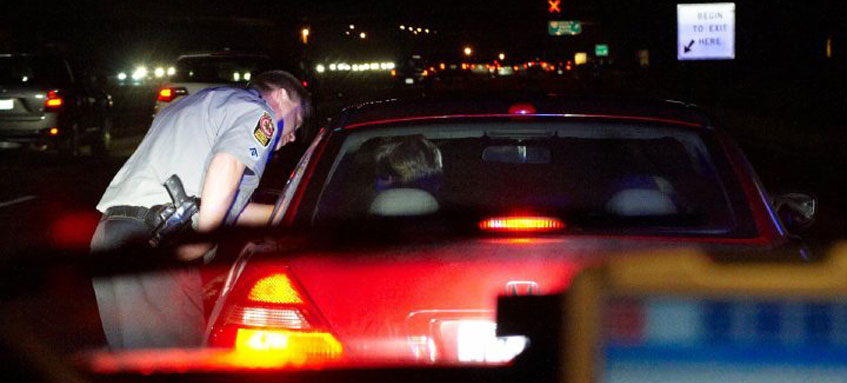
Understanding the sequence helps remove some of the fear. Most stops near Depew unfold in a familiar pattern. An officer signals you to pull over, perhaps for speeding on Broadway, a minor equipment issue on French Rd, or weaving on Dick Rd. From there, the officer is watching and listening for any sign of impairment: the smell of alcohol, slurred speech, or fumbling for documents. You may then be asked to step out and perform field sobriety tests, and possibly to blow into a small handheld device at the roadside. It is important to know that those roadside tests are voluntary. Nothing that happens on the shoulder of Transit Rd is the final word on your case, and every step of it can be picked apart later.
What happens after the arrest
The hours after an arrest can feel disorienting. Typically you are taken to be processed, the chemical test is requested, and you are given an appearance ticket or held for arraignment, the first court date where the charges are formally read and your driving privileges are usually addressed. You may leave with paperwork that looks confusing and a suspended license. None of that means your case is decided; it means the process has begun, and the sooner you have counsel reviewing those documents, the better positioned you are. We translate the legal language into plain terms and tell you what each piece of paper actually means for you.
Chemical and breath testing in a Depew DWI
The chemical test (breath, blood, or urine) is usually the heart of the prosecution’s case, and it is far from infallible. Breath-testing instruments must be properly calibrated, regularly maintained, and operated by a certified operator following a strict protocol. We obtain and scrutinize the device’s maintenance and calibration records, the operator’s certification, and the testing procedure, looking for any deviation that could make a reading unreliable.
The roadside field sobriety tests that often precede the chemical test (the walk-and-turn, the one-leg stand, the horizontal gaze nystagmus test) are equally open to challenge. They are scored subjectively and are easily skewed by cold Western New York weather, uneven shoulders along roads like Dick Rd, footwear, fatigue, or a medical condition. We dig into how each test was administered, and whether there was a lawful basis to stop and detain you in the first place.
Chemical test refusals and the DMV hearing
If you refused the chemical test, you are facing two separate battles. Apart from the criminal case in court, the DMV brings its own refusal hearing, governed by its own rules and scheduled quickly. A knowing refusal carries a mandatory one-year license revocation, even if you are ultimately successful in the criminal case. Because the deadlines are short and the consequences severe, this is not something to navigate alone. We have appeared at countless refusal hearings and know the process inside and out; learn more on our DMV hearings page.
Plea negotiation and reducing the charge
Not every DWI ends with a conviction on the top charge. In many cases the most valuable work happens in negotiation, where the goal is often a reduction from the crime of DWI to the lesser DWAI infraction, sparing you a criminal record while still resolving the matter. Whether that is achievable depends on the strength of the evidence: the reliability of the chemical test, the legality of the stop, your driving history, and the practices of the particular court and prosecutor handling your case. We assess all of these early, so that any plea discussion is grounded in the genuine leverage your case carries rather than guesswork. Where the facts do not support a reduction, we are equally prepared to litigate and, if warranted, take the matter to trial.
Where your Depew DWI case is handled
Depew’s status as an incorporated village, one that unusually spans both the Town of Cheektowaga and the Town of Lancaster, affects where your case lands. As a general matter in New York, a charge issued within a village is heard in that village’s justice court, so a Depew DWI is typically handled in the Village of Depew Justice Court. Depending on the precise location of the stop and how the case is filed, the Cheektowaga or Lancaster town courts may also be involved.
We are intentionally not listing a court address, judge, or clerk here, because such details change and a serious charge is no place for outdated information. What you should know is that we regularly appear in the village and town courts surrounding Depew and understand how each tends to approach DWI matters, knowledge that helps us resolve cases efficiently and keep you realistically informed.
How Bakshi & Leta defend your DWI
With a DWI, speed matters. At your arraignment the court will usually suspend your driving privileges, which can quickly upend work, school, and family obligations. By reaching out to us right away, we can move to secure hardship privileges and a conditional license so you can keep driving for essential needs while your case proceeds.
From there we manage every stage (arraignment, motions, hearings, plea negotiations, and trial if it comes to that) while keeping you informed throughout. Our familiarity with the courts of Erie County lets us pursue the best available outcome, whether that is a reduction to DWAI, a favorable resolution, or a dismissal where the facts and the law support it.
Choosing the right lawyer near Depew
When you are picking a lawyer, look for genuine, focused experience with New York alcohol-driving law and real familiarity with the courts near Depew. An attorney who regularly handles these cases in Erie County understands the local prosecutors, the typical plea pathways, and how to move a case without unnecessary delay or expense. Beware of anyone who promises a guaranteed result; what you want instead is candor, experience, and a clear plan. If your stop also involved a speeding ticket or another traffic offense, we handle those too; see our speeding & traffic page.
Serving Depew and the surrounding communities
From the village’s railroad-era heart to the commercial stretch along Transit Rd, Depew is closely tied to its neighbors in Cheektowaga and Lancaster, and we defend DWI clients across all of them and throughout Erie County. Whether your stop happened on the Cheektowaga side of the village or out toward Lancaster, we are ready to step in. See every community we serve on our areas we serve page.
A Depew DWI carries real, lasting consequences, and the decisions you make in the first days can shape everything that follows. Do not face New York’s DWI system without an experienced advocate at your side. Call Bakshi & Leta today at (716) 631-0004 for a free, confidential consultation.
Depew DWI questions
Frequently asked questions
Call (716) 631-0004 for answers specific to your case.
A BAC of 0.08% or higher is charged as DWI, a crime. A BAC of 0.05% to 0.07% is typically DWAI, a traffic infraction, and 0.18% or higher is Aggravated DWI. Even below 0.08% you can be charged if an officer believes your driving was impaired.
A first DWI is generally a misdemeanor with a minimum $500 fine, at least a six-month revocation, and a required ignition interlock device. A DWAI carries a minimum $300 fine and a 90-day suspension; an Aggravated DWI a minimum $1,000 fine and a one-year revocation.
Refusing the chemical test triggers a separate DMV refusal hearing apart from the criminal case, and a knowing refusal carries a mandatory one-year revocation even if you later win in court. These hearings move quickly, so involve a lawyer right away.
A DWI becomes a felony if you have a prior DWI conviction within the past ten years, or where aggravating factors such as a child in the vehicle under Leandra’s Law apply. Felony DWI carries longer revocations, larger fines, and possible state prison.
Depew is an incorporated village in Erie County, so a charge issued within it is typically handled in the Village of Depew Justice Court. Because the village spans Cheektowaga and Lancaster, those town courts can also come into play. We appear in these courts regularly.
Stay calm and polite, hand over your license and registration, and avoid arguing or volunteering details at the roadside. You are not required to say where you have been or how much you have had to drink. Then contact a lawyer as soon as possible.
Yes. Knowing how Erie County prosecutors and the village and town courts near Depew handle alcohol cases makes a real difference. With more than 25 years of focused DWI experience across Western New York, Bakshi & Leta know these courts well.
Charged with DWI in Depew? Call now.
The sooner you call, the more we can do to protect your license and your record. Free, confidential consultation.