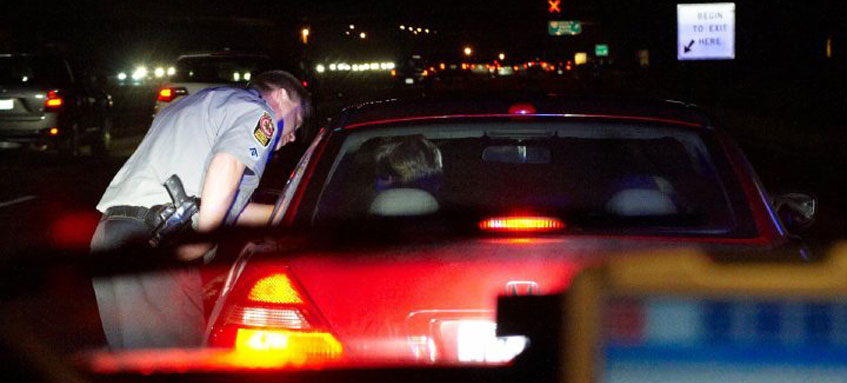
A DWI charge in East Aurora can upend the life of an otherwise law-abiding person in a single evening. Most of the drivers we represent had never faced a criminal charge before, and the experience (the flashing lights on Main Street, the roadside tests, the night in custody) is frightening and unfamiliar. If you have been charged with Driving While Intoxicated anywhere in the Southtowns of Erie County, Sunil Bakshi and Joseph Leta bring more than 25 years of focused DWI experience to your defense.
East Aurora is a historic village within the Town of Aurora, set in the Southtowns south of Buffalo, a community known for the Roycroft Campus, the origins of Fisher-Price, and a walkable downtown along Main Street (Route 20A). The same lively dining-and-drinking scene that makes the village so appealing also means many DWI stops begin here, on Main Street, along Route 16, or on Grey Street as drivers head home toward Elma, Wales, or Holland. Understanding exactly what you are charged with, and what is at stake, is the foundation of fighting back.
How New York grades a DWI by blood-alcohol content
New York separates alcohol- and drug-related driving offenses into distinct charges, graded largely by your blood-alcohol content (BAC). Where your reading falls can mean the difference between a non-criminal infraction and a serious crime, so knowing exactly which charge you face is the first step toward a strong defense:
- DWAI (Driving While Ability Impaired): a traffic infraction, typically charged at a BAC between 0.05% and 0.07%. It carries a 90-day license suspension and a minimum fine of $300. A DWAI is not a crime, and reducing a DWI to a DWAI is frequently the goal of a successful negotiation.
- DWI (Driving While Intoxicated): the most common charge and a crime in New York, generally charged at 0.08% BAC or higher. A first conviction carries a minimum fine of $500 and a license revocation of at least six months.
- Aggravated DWI: a BAC of 0.18% or higher. This crime carries a minimum fine of $1,000 and a one-year revocation.
- DWI–Drugs: impairment by drugs rather than, or in addition to, alcohol. These cases turn on different proof, because there is no simple breath reading to fall back on.
Because the tier drives the penalty, the accuracy and reliability of your BAC reading is often the single most important issue in an East Aurora DWI case.
The real penalties of a DWI conviction
A DWI conviction reaches well beyond a fine and a court date. New York requires an ignition interlock device on every vehicle registered in your name, at your own expense of roughly $75 or more per month, even while your driving privileges are revoked. A conviction also leaves you with a permanent criminal record, which can surface in background checks for employment, housing, and professional licensing.
The collateral consequences add up quickly: sharply higher auto-insurance premiums, mandatory alcohol screening and possible treatment, surcharges on top of the statutory fines, and potential complications traveling to nearby Canada. Commercial drivers face additional nationwide reporting of any conviction against their CDL. For many East Aurora residents who commute into Buffalo, the loss of a license alone is the most immediate and painful penalty of all.
When a DWI becomes a felony
A first-offense DWI is generally a misdemeanor in New York, but the charge escalates to a felony in serious circumstances. If you have a prior DWI conviction within the past ten years, a new DWI is charged as a felony, with dramatically harsher penalties, longer revocations, far larger fines, and the real possibility of state prison. Aggravating factors also elevate a case: under Leandra’s Law, driving while intoxicated with a child under sixteen in the vehicle is a felony, even on a first offense. We take these high-stakes cases seriously and prepare them accordingly.
How a DWI stop happens in and around East Aurora
Most stops here do not begin with anything dramatic. A driver who has had a glass of wine with dinner downtown and then heads out along Main Street or turns onto Route 16 can be pulled over for something as ordinary as a rolling stop, a burned-out brake light, or drifting near the centerline on a dark stretch of Grey Street. What began as a routine traffic encounter becomes a DWI investigation the moment the officer reports the smell of alcohol.
It also surprises people how little alcohol it takes to lift a blood-alcohol reading over New York’s limit, and how long the body needs to clear it. You can be driving carefully, be stopped through no fault of your own, and still find yourself under arrest on the side of a Southtowns road. That is not a reason to assume the case against you is airtight. It is a reason to look hard at every step the officer took.
What to expect after an East Aurora arrest
Knowing what comes next takes some of the fear out of the process. After a roadside stop, the sequence usually looks like this:
- The stop and investigation. The officer looks for signs of impairment and may ask you to step out of the car.
- Field sobriety tests. You may be asked to perform the walk-and-turn, the one-leg stand, or the horizontal gaze nystagmus test.
- Chemical testing. A breath, blood, or urine test measures your blood-alcohol content.
- Arrest and release. You are typically processed and given a date to appear in court.
- Arraignment. At your first appearance the court will usually suspend your driving privileges, which is why calling a lawyer quickly matters so much.
The chemical test and your breath reading
The chemical test (breath, blood, or urine) is usually the centerpiece of the prosecution’s DWI case, and it is also where strong defenses are often found. Breath-testing instruments must be properly calibrated, regularly maintained, and operated by a certified operator who follows an exacting protocol. We obtain and scrutinize the maintenance and calibration records, the operator’s certification, and the testing procedure, looking for any deviation that could render a reading unreliable.
The roadside field sobriety tests deserve the same scrutiny. The walk-and-turn, the one-leg stand, and the horizontal gaze nystagmus test are subjective and frequently administered incorrectly, and their results can be skewed by nerves, footwear, an uneven road shoulder, or a medical condition. We examine how each test was given and whether the officer had a lawful basis for the stop in the first place, because many DWI stops in the Southtowns begin as ordinary traffic stops that may not have been justified.
We look just as closely at what the officer says he observed, because a great deal of what gets written down as impairment has an innocent explanation. Nervousness, fatigue, a medical condition, or simply standing in cold Southtowns weather at the roadside can all produce the flushed face, the unsteady footing, and the slow responses that end up in a police report. An arrest is not a verdict. The case is built piece by piece, from the stop to the roadside observations to the field tests to the chemical reading, and every one of those pieces is also a place to push back.
Chemical-test refusal and the DMV hearing
If you refused to take the chemical test, you face a second proceeding that runs entirely separate from the criminal charge: a Department of Motor Vehicles refusal hearing. A knowing refusal carries its own license revocation, even if you are ultimately acquitted of the DWI in court. These hearings are scheduled quickly, are governed by their own rules, and should never be faced alone. We have appeared at hundreds of refusal hearings and know the process and the personnel; you can read more on our dedicated DMV hearings page.
Reducing a DWI, and the goal of a DWAI
Not every DWI charge ends in a DWI conviction. One of the most important things a defense attorney does is work toward a reduction, most often from the crime of DWI down to a DWAI, the non-criminal infraction. That single step can mean the difference between carrying a permanent criminal record and walking away with a violation that does not brand you as a criminal. Whether a reduction is realistic depends on the strength of the evidence, your BAC reading, your driving history, and the practices of the particular court and prosecutor.
This is where the BAC tiers we described above become so consequential. A borderline reading near 0.08%, a questionable breath instrument, or a stop that may not have been lawful all give us leverage in negotiation. We use every weakness in the prosecution’s proof to argue for the best available outcome, and when the evidence does not support a fair resolution, we are fully prepared to litigate. To understand the full range of charges and defenses, see our main DWI defense page.
Where your East Aurora DWI case is heard
A DWI stop within the Village of East Aurora is generally handled in the local justice court that serves the village, while a stop on a surrounding road in the Town of Aurora, or in a neighboring Southtowns community like Elma, Wales, or Holland, may be heard in that town’s court. Each court has its own personnel, pace, and expectations, and our familiarity with how DWI cases are actually resolved across Erie County lets us defend yours effectively and efficiently.
That local knowledge is not a small thing. DWI cases are won and lost on it. An attorney who appears in East Aurora and the surrounding Southtowns courts regularly knows which issues a particular judge takes seriously, how the local prosecutor approaches a negotiation, and where the real opportunities lie to reduce a charge or protect your privileges. The same file can end very differently in two courts twenty minutes apart, which is why we tailor our approach to the specific court handling your matter rather than working from a script.
Keeping you on the road while your case is pending
For most East Aurora drivers, the immediate crisis after a DWI arrest is simple and urgent: how do I get to work tomorrow? When the court suspends your driving privileges at arraignment, the Southtowns’ reliance on cars makes that suspension bite hard. The good news is that New York provides relief while a case is pending. We can frequently obtain a hardship privilege at the earliest stage, and later a conditional license that allows driving for work, school, medical appointments, and other essential purposes. These privileges are not automatic. They require the right showing at the right moment, which is one more reason early representation pays off.
How Bakshi & Leta defend your DWI
With a DWI arrest, acting fast matters. At arraignment the court will usually suspend your driving privileges, and we can frequently move to obtain hardship privileges and a conditional license so you can keep getting to work, school, and medical appointments while your case proceeds. From the day after your arrest through the final reinstatement of your license, we guide you through arraignment, motions, hearings, plea negotiations, and trial if necessary, explaining each step so you are never in the dark. To see every Southtowns community and court we serve, visit our areas we serve page.
The sooner you call, the more we can do
If there is one message we want every East Aurora driver to hear, it is this: do not wait. The hours and days after an arrest are when the most can be done, preserving your right to drive, identifying witnesses while memories are still fresh, and getting ahead of deadlines you may not know exist. The refusal timeline and the court date both move quickly, and early decisions often shape the entire case.
You do not need to have all the answers before you call. Many of the people who reach us are embarrassed and convinced their lives are ruined, and time and again we show them that a charge is the start of a defense, not the end of the road. We take every case without judgment and with a clear plan.
A DWI conviction in East Aurora carries lasting consequences for your license, your record, and your future, but a charge is not a conviction, and the right defense can change everything. With more than 25 years of focused DWI experience across Erie County and all of Western New York, Bakshi & Leta are ready to fight for you. Call today at (716) 631-0004 for a free, confidential consultation.
East Aurora DWI questions
Frequently asked questions
Call (716) 631-0004 for answers specific to your case.
A blood-alcohol content of 0.08% or higher supports a DWI charge. A reading between 0.05% and 0.07% can be charged as the lesser DWAI, and a BAC of 0.18% or higher is charged as Aggravated DWI, which carries heavier penalties.
A first DWI is generally a misdemeanor carrying a minimum $500 fine, a license revocation of at least six months, a mandatory ignition interlock device, and a permanent criminal record. Aggravated DWI raises the minimum fine to $1,000 and the revocation to one year.
Refusing a chemical test triggers a separate DMV refusal hearing, entirely apart from the criminal case. A knowing refusal carries its own license revocation even if you are never convicted in court. These hearings move quickly and follow their own rules, so involve a lawyer right away.
Yes. While a first DWI is usually a misdemeanor, a DWI becomes a felony when you have a prior DWI conviction within the past ten years, or when aggravating factors such as a child in the vehicle under Leandra’s Law are present. Felony DWI carries far harsher consequences, including possible state prison.
A stop within the Village of East Aurora is generally handled in the local justice court that serves the village, while a stop on a surrounding road in the Town of Aurora or a neighboring Southtowns community may be heard in that town’s court. We appear throughout Erie County and tailor our approach to the specific court.
You are typically released with a court date, your license is usually suspended at arraignment, and the prosecution builds its case from the stop, the field tests, and any chemical test. The sooner you call, the sooner we can protect your driving privileges and examine whether the stop and testing were proper.
DWI cases turn on local practice. Each Western New York court has its own personnel and expectations, and an attorney who appears in Erie County’s Southtowns courts regularly knows how cases there are resolved. With more than 25 years of focused DWI experience, we bring that familiarity to every East Aurora case.
Charged with DWI in East Aurora? Call now.
The sooner you call, the more we can do to protect your license and your record. Free, confidential consultation.