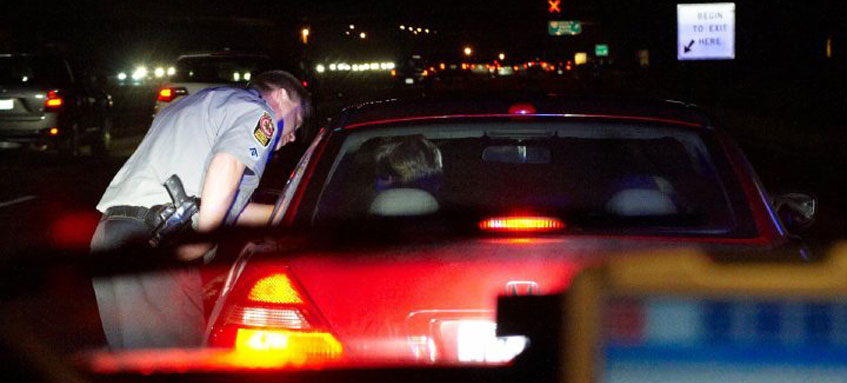
A DWI charge in the Town of Eden is a serious matter with consequences that follow you long after you leave court: a possible criminal record, a revoked license, mandatory fines, and an ignition interlock device on your car. For a rural Southtowns family that depends on driving for everything, those stakes are especially high. Sunil Bakshi and Joseph Leta have more than 25 years of focused DWI experience across Erie County and all of Western New York, and we are ready to defend your license, your record, and your livelihood.
Eden sits in the rural Southtowns of Western New York, a farming town threaded by roads like Route 62, Sisson Highway, and Eden-Evans Center Road. It is the kind of place where you can drive for miles past fields and barns without seeing another set of headlights. That rural character shapes how arrests happen here, and it shapes how we defend them: a late-night stop on a deserted county road looks very different from one on a busy Buffalo street. Many of our Eden clients have never faced the criminal justice system before, and the formal language of a New York DWI (the BAC tiers, the chemical test, the refusal hearing) can be overwhelming. This page explains exactly what the charge means and how we fight it.
If you are reading this the morning after an arrest, you are probably anxious and unsure what comes next. Take a breath. An arrest is not a conviction, and the early decisions you make, especially getting experienced counsel involved quickly, often shape how the whole case turns out.
It also helps to understand that a DWI case is really two parallel cases at once. One is the criminal charge that proceeds in court and can end in a conviction, fines, and jail exposure. The other is the administrative side, what the Department of Motor Vehicles does to your license, which can move on its own timeline and by its own rules. A good defense has to manage both at the same time, because winning one and ignoring the other can still leave you unable to drive.
How New York grades a DWI by BAC
Unlike some states that lump everything under one label, New York separates drinking-and-driving offenses by your blood-alcohol content, and each tier carries very different consequences:
- DWAI (Driving While Ability Impaired): a traffic infraction, generally charged between 0.05% and 0.07% BAC. A first DWAI carries a minimum fine of $300 and a 90-day license suspension.
- DWI (Driving While Intoxicated): a misdemeanor crime, charged at 0.08% BAC or higher. A first conviction carries a minimum fine of $500 and at least a six-month revocation.
- Aggravated DWI: a BAC of 0.18% or higher. This crime carries a minimum fine of $1,000 and a one-year revocation.
- DWI–Drugs: impaired driving caused by drugs rather than alcohol, where there is no breath reading to argue about and the case turns instead on the officer’s observations and any blood or urine testing.
Because the line between a violation and a crime can come down to a few hundredths of a percent on a breath machine, the reliability of the chemical test is often where a DWI case is won or lost. A reading of 0.07% and a reading of 0.08% sit a hair apart on the instrument but a world apart in the law (one is an infraction, the other a crime), which is exactly why we treat the machine’s accuracy as a central issue rather than a technicality.
Repeat offenses and felony exposure
New York treats a second drunk-driving offense within ten years far more harshly than a first. A DWI with a qualifying prior conviction in that window can be charged as a felony, exposing you to a multi-year revocation, substantially higher fines, and the possibility of state prison rather than a local sentence. Eden drivers with any prior record need to understand this exposure early, because it changes the entire strategy of the case and the urgency of getting ahead of it. If your situation involves a felony-level charge, our defense team handles those cases throughout Erie County.
The penalties that reach beyond the courtroom
The fine and revocation are only the beginning. A DWI conviction in New York requires an ignition interlock device on any vehicle you own or operate, at your own expense of roughly $75 or more per month, and it leaves a permanent criminal record that can surface in background checks for jobs, professional licenses, and even travel to nearby Canada. Insurance premiums climb steeply. If you have a prior DWI conviction within the past ten years, a new charge can be elevated to a felony, with far longer revocations and the possibility of state prison. And under Leandra’s Law, driving while intoxicated with a child under 16 in the vehicle is automatically a felony, regardless of any prior record.
How a Southtowns traffic stop unfolds
Most Eden cases begin with an ordinary traffic stop: a taillight, a wide turn off Sisson Highway, or simply being out late on a rural road where any car draws attention. From there the encounter usually follows a familiar pattern. The officer says he smells alcohol, asks where you have been, and requests that you step out for field sobriety tests.
Those roadside tests (the walk-and-turn, the one-leg stand, and the horizontal gaze nystagmus test) are deeply affected by conditions that are everywhere in rural Eden. A sloping gravel shoulder, a frosted or muddy farm road, cold Southtowns wind, and the simple nervousness of being stopped alone in the dark can all make a perfectly sober person look unsteady. We examine how and where each test was given, because a test administered on uneven ground at the edge of Route 62 is not the controlled exercise the manual assumes.
The chemical and breath test
The chemical test, usually a breath test administered at the station after arrest, is the heart of most DWI prosecutions. The instruments used are not infallible. They must be properly calibrated and maintained on a set schedule, and they must be operated by a certified operator following a specific protocol. We obtain the calibration and maintenance records, the operator’s certification, and the testing logs, and we scrutinize them for any deviation that could render your result unreliable.
What to expect at your arraignment
Your first court date is the arraignment, where the charge is read and the court typically suspends your license. It is normal to feel overwhelmed at that first appearance, because the paperwork is dense and the consequences feel immediate. Having a lawyer beside you means someone is there to ask for hardship privileges, push back on conditions that do not fit your situation, and make sure nothing is agreed to that you do not understand. For a broader guide to how the formal charge and its penalties work, see our main DWI defense page.
Refusal and the DMV hearing
If you declined the chemical test, you now face two separate battles. The criminal case proceeds in court, but the refusal itself triggers a distinct Department of Motor Vehicles hearing governed by its own rules. A finding that you refused carries a mandatory one-year license revocation, even if you ultimately prevail in the criminal case. These hearings are scheduled fast, and missing one can cost you your license by default. We have handled hundreds of them and know the process from the inside; you can learn more on our DMV hearings page.
Where an Eden DWI is prosecuted
As a general rule, a misdemeanor DWI arising within the Town of Eden is handled in the local town justice court, as most rural Southtowns matters are, while a felony-level DWI moves up to Erie County Court. We will confirm exactly where your case is scheduled rather than assume, and we never invent details we cannot verify from your paperwork. We appear regularly throughout the town and village courts of Erie County and the wider Southtowns, including cases connected to neighboring Evans, Boston, and North Collins.
Misconceptions we hear from Eden drivers
Most people arrive at our office carrying assumptions about drunk-driving law that do not match what New York actually does. A few are worth clearing up right away:
- “Is a first offense automatically a felony?” No. A first DWI is generally a misdemeanor. It rises to a felony only in the circumstances described above: a qualifying prior within ten years, or a child in the vehicle under Leandra’s Law.
- “Will I definitely lose my license forever?” No. Penalties range from a 90-day suspension for a DWAI to a six-month or longer revocation for a DWI, and conditional driving privileges are frequently available while the case is open.
- “Should I just plead guilty to get it over with?” Almost never before a lawyer reviews the stop and the testing. What looks like an open-and-shut case often has real defenses hiding in the calibration records or in the circumstances of a rural roadside stop.
The point is simple: secondhand assumptions should not drive your decisions. We start from the actual New York charge on your paperwork and the actual facts of your stop in Eden.
Why rural distance changes the strategy
A DWI revocation hits differently in a place like Eden. There is no train, little bus service, and real distance between home, work in Buffalo or the Southtowns, school, and medical care. For that reason, securing hardship privileges at arraignment and a conditional license afterward is one of the most important things we do. It keeps you employed and keeps your household running while the case is pending. We also handle the practical side of the interlock requirement so the conditions of your license do not catch you off guard.
Hardship privileges and conditional licenses come with strict limits (the times you may drive, the destinations, and the documentation you must keep), and a single misstep can jeopardize them. For a farmer who has to reach equipment dealers and feed suppliers, or a tradesperson commuting from Eden into Buffalo before dawn, those limits have to be set up correctly the first time. We make sure the privileges you receive actually match the life you have to keep living.
How Bakshi & Leta defend your Eden DWI
From the day after your arrest until the DMV fully reinstates your license, we guide you through every stage: arraignment, motions, hearings, plea negotiations, and trial if necessary. A frequent goal is reducing a DWI to a DWAI, which spares you a criminal conviction, but the right strategy always depends on the specific facts: the reason for the stop, how the testing was done, and the strength of the evidence. We are a small, focused firm, so you deal directly with Sunil Bakshi and Joseph Leta at every step. If a related traffic ticket accompanies your charge, our speeding & traffic page explains how we handle those as well.
It is tempting to hire whichever firm advertises the loudest, but a drunk-driving case turns on local knowledge: how the area courts operate, how these rural stops actually happen, and how to challenge testing done on dark farm roads. You work directly with Sunil Bakshi and Joseph Leta, not a rotating cast of associates, and we explain each step so you are never left in the dark, the way those Eden back roads can be. If you would like to see every community we cover, our areas we serve page lists them.
A New York DWI is too serious to face without experienced, local counsel who knows both the law and the Southtowns courts. Call Bakshi & Leta today at (716) 631-0004 for a free, confidential consultation, available days, nights, and weekends.
Eden DWI questions
Frequently asked questions
Call (716) 631-0004 for answers specific to your case.
New York grades drunk driving by blood-alcohol content: DWAI is generally 0.05%–0.07%, DWI is 0.08% or higher, and Aggravated DWI is 0.18% or higher. DWAI is a traffic infraction, while DWI and Aggravated DWI are crimes that create a permanent record.
A first DWI carries a minimum $500 fine, at least a six-month revocation, and a mandatory ignition interlock device. Aggravated DWI raises that to a $1,000 minimum fine and a one-year revocation; a DWAI carries a $300 minimum fine and a 90-day suspension.
A refusal triggers a separate DMV hearing apart from the criminal case. A finding of refusal carries a mandatory one-year revocation even if you later win in court. These hearings are scheduled quickly with their own rules, so involve a lawyer right away.
Yes. New York requires an interlock device on any vehicle you own or operate after a DWI conviction, at roughly $75 or more per month. In a rural town like Eden where driving is a daily necessity, the interlock and conditional-license terms need careful handling, which we manage for you.
Most misdemeanor drunk-driving charges arising in the Town of Eden are handled in the local town justice court, while felony matters move up to Erie County Court. We appear across the Southtowns and will confirm exactly where your case is scheduled.
Eden stops often happen on long, dark roads like Route 62 or Sisson Highway, where field testing is skewed by uneven shoulders and weather. A lawyer who knows the local courts and how these rural stops unfold can challenge the stop and the results far more effectively.
Often, yes. Your license is usually suspended at arraignment, but we can frequently obtain hardship privileges and a conditional license. In a rural town like Eden with little transit and long drives to Buffalo, preserving driving is critical, and we prioritize it from day one.
Charged with DWI in Eden? Call now.
The sooner you call, the more we can do to protect your license and your record. Free, confidential consultation.