A DWI charge in the Village of Kenmore is a serious matter with consequences that are written directly into New York law: license revocation, mandatory fines, an ignition interlock device, and, in some cases, a felony. Before you can fight any of it, you need to understand exactly what the charge is and what penalties attach to it. Sunil Bakshi and Joseph Leta have defended Erie County drivers against the full range of these charges for decades, and on this page we lay out the mechanics in plain terms.
Driving While Intoxicated is the formal name New York gives the offense most people loosely call drunk driving. It is prosecuted under the Vehicle and Traffic Law, and unlike a parking ticket or a speeding citation, a DWI conviction is a crime that follows you. What turns an arrest into a manageable problem rather than a life-altering one is often the difference between a defended case and an undefended one, and that starts with knowing the tiers.
The BAC tiers: where your case sits
New York grades alcohol-related driving charges largely by blood alcohol content, or BAC, and each tier carries its own penalties. The level the State assigns to your case determines almost everything that follows:
- DWAI by alcohol, roughly 0.05 to 0.07 BAC. A traffic infraction, not a crime. A first offense carries a 90-day license suspension and a fine of at least $300.
- DWI, 0.08 BAC or higher. A misdemeanor on a first offense, with a license revocation of at least six months and a fine of at least $500.
- Aggravated DWI, 0.18 BAC or higher. A more serious misdemeanor on a first offense, carrying a one-year license revocation and a fine of at least $1,000.
Those statutory numbers are the floor, not the ceiling, and they do not include surcharges, the cost of an interlock device, or the long tail of higher insurance. Because a single tenth of a percentage point can move you from an infraction to a crime, or from an ordinary DWI to an aggravated one, we examine how your sample was collected, stored, and measured with real care.
When the charge is not about alcohol
Not every impaired-driving charge involves a breath reading, and some involve no alcohol at all. New York also charges DWAI–Drugs (impairment by a drug) and DWAI–Combination (impairment by drugs and alcohol together). Neither requires that any alcohol level be established, which means the case is built on an officer’s observations, a drug recognition evaluation, and often a blood draw rather than a number from a breath instrument. Those cases turn on different evidence and different expertise, and we defend them differently.
Certain circumstances also escalate an ordinary stop into something far more serious. The clearest example is a child in the vehicle, which brings New York’s child-endangerment provisions into play and raises the exposure immediately. Knowing where a Kenmore case falls on this spectrum, and why, is the foundation we build a strategy on.
Why a DWAI resolution can change everything
For many of the people who come to us after a Kenmore arrest, the most important question is not whether they can win at trial. It is whether they can avoid carrying a criminal conviction at all. That is what makes the DWAI infraction so significant: because DWAI by alcohol is not a crime, resolving a case at that level keeps a misdemeanor off your record entirely. It is not available or appropriate in every case, and it is never automatic. It is something we work toward through careful review of the evidence and negotiation with the prosecutor, and it is one of the first possibilities we weigh when we look at your facts.
When a second offense becomes a felony
The penalties above describe a first offense. New York uses a ten-year look-back window, and it changes the picture dramatically. A second DWI within ten years of a prior conviction is charged as a felony, not a misdemeanor, and a third within that window is a more serious felony still. A felony exposes you to the possibility of state prison, substantially larger fines, and a permanent record that can affect employment, professional licenses, and more. For a Kenmore driver who already has a prior, a new arrest is not a repeat of the first experience. It is a categorically more dangerous situation, and it should be treated that way from day one. Our DWI defense page covers how we approach repeat and felony-level charges.
The ignition interlock and conditional license
A DWI conviction in New York generally comes with an ignition interlock device requirement. The court orders the device installed on any vehicle you own or operate, usually for a period of months. It requires a breath sample before the engine will start and at intervals while you drive, and the driver pays for both installation and ongoing monitoring, commonly around $75 or more every month. Alongside the interlock, we work to secure a conditional license so you can continue driving for permitted purposes such as work, school, and medical care while the case and any revocation period run their course. Mapping out these terms early means you are never blindsided by a cost or a condition you did not see coming.
There is an earlier pressure point too. Your driving privileges are typically suspended at your very first court appearance, which can upend a working life overnight. People sometimes assume that a walkable village means you can get by without a car, but in reality most Kenmore residents still depend on driving: to a job in downtown Buffalo, to the Town of Tonawanda’s employers, to doctors and schools across the region. Where hardship privileges apply we pursue them immediately, so the gap between arraignment and a conditional license does not cost you your livelihood.
The DMV refusal hearing, a second front
Many people are surprised to learn that a DWI arrest can set two separate proceedings in motion. If you are accused of refusing the chemical breath or blood test, the Department of Motor Vehicles holds its own hearing, completely independent of the criminal case in court. A finding that you refused can mean a one-year license revocation and a civil penalty, and that result can stand even if the criminal charge is later reduced or thrown out. Two tracks, two sets of consequences, two places your license is on the line. We defend both, and our DMV hearings page explains the refusal process in more detail.
The hidden costs beyond the fine
The statutory fines are only the part of a DWI you can see coming. New York adds a mandatory surcharge to any conviction, and a DWI also triggers an annual Driver Responsibility Assessment that the Department of Motor Vehicles collects over several years on top of everything else. Then there is insurance: a DWI conviction routinely sends premiums sharply higher and can affect coverage for years. Add the cost of the interlock device, any required alcohol screening or program, and the practical toll of a suspended or revoked license, and the true price of an undefended DWI dwarfs the fine printed in the statute. We keep the full picture in front of you, because decisions about how to resolve a case should be made with all of those numbers on the table, not just the obvious one.
There are non-financial costs as well. A DWI conviction can complicate employment, especially for anyone who drives for a living or holds a commercial license, and it can have consequences for professional licensing and for non-citizens. These ripple effects are part of why the difference between a DWI and a reduced charge is worth fighting for, and why we treat every Kenmore case as more than the sum of its fines.
How a Kenmore DWI stop unfolds
Kenmore packs a great deal into a little more than one square mile. It is one of the most densely populated villages in all of New York, a compact, walkable first-ring suburb pressed right up against the City of Buffalo, and that density has a direct effect on impaired-driving enforcement. Streets are close together, blocks are short, police presence is concentrated, and the same few corridors (Delaware Avenue, Military Road, Elmwood Avenue, and Kenmore Avenue along the city line) carry steady commuter traffic at all hours and see the bulk of the stops.
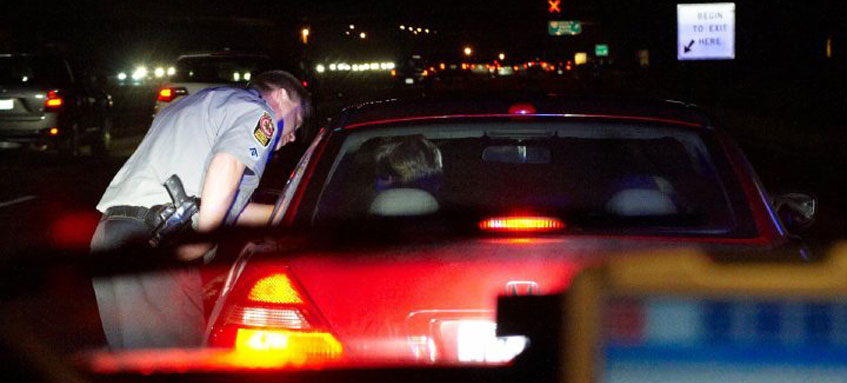
A DWI case here usually begins with a routine stop on one of those streets: a missed signal, a brake light out, a wide turn off Delaware Avenue, a few miles over the limit. From there the encounter moves to roadside field sobriety tests (the walk-and-turn, the one-leg stand, the horizontal gaze nystagmus test) and, after an arrest, to a chemical breath test at the station. Each step is open to challenge. Field tests are scored by an officer’s eye and are easily skewed by a cold night off the lake, uneven pavement, the wrong shoes, an old injury, or plain nerves. The breath instrument must be properly calibrated, maintained, and run by a certified operator, with paperwork that survives scrutiny. We pull those records and look for every weakness.
Which court your case lands in
Because Kenmore is a village within the Town of Tonawanda in Erie County, a Kenmore DWI may be heard in the Village of Kenmore Court or the Town of Tonawanda Court, depending on where the charge arose. Kenmore Avenue is the literal border between the village and the City of Buffalo, and the village is compact enough that a driver can cross municipal lines in just a few blocks. A stop that begins on one side of that line may involve a different police agency, and may land in a different court, than a stop a block away, so the precise spot where you were pulled over is one of the first details we nail down. Sorting out the correct court and prosecuting agency is often part of the early work. We appear throughout the town and village courts of Erie County and know what each expects at arraignment, in motions, and in plea negotiations. You can see every community we serve on our areas we serve page.
Why a local defense matters in a place this small
We have spent years in the courts that serve this community, and that familiarity is not a marketing line; it is practical knowledge about how a case actually moves. We know what to expect at a Town of Tonawanda arraignment, how local prosecutors tend to evaluate first-offense matters, and where the real openings in a borderline breath case usually lie. When you call us, you are not getting a generic playbook. You are getting a defense built for Kenmore.
Just as important, you are getting attorneys who will explain all of this to you in language you can use. The fear that follows an arrest often comes from not knowing what happens next: whether you will lose your license, whether you have to plead guilty, whether this becomes a permanent stain. From the first phone call, we replace that uncertainty with a clear picture of the road ahead, the choices you have, and what we can realistically do at each step.
What we do in the first days of your case
The period right after a DWI arrest is when the most can be gained or lost, and it is when we go to work. We move quickly to protect your ability to drive, requesting hardship privileges where they apply and laying the groundwork for a conditional license. We secure and review the evidence while it is fresh: the officer’s observations, the field sobriety scoring, the breath instrument’s calibration and maintenance records, and any video. If a chemical-test refusal is alleged, we prepare for the separate DMV hearing on its own timeline so that deadline never catches you unprepared. And throughout, we keep you informed, because a client who understands the case is a client who can make good decisions about it.
Every Kenmore DWI is different. A first-offense DWAI-level reading on Delaware Avenue is a very different matter from an aggravated charge with a prior conviction inside the ten-year window. Our job is to find the strongest available path for your specific facts, whether that is a hard look at the legality of the stop, a challenge to the reliability of the breath result, a negotiated reduction that keeps a felony or a crime off your record, or, where it is the right call, a defense taken all the way to trial. What we never do is treat the statutory penalty as the end of the conversation.
Kenmore DWI questions
Frequently asked questions
Call (716) 631-0004 for answers specific to your case.
New York grades alcohol-related driving by blood alcohol content. About 0.05–0.07 is DWAI by alcohol, a traffic infraction with a 90-day suspension and a fine of at least $300. A reading of 0.08 or higher is DWI, a misdemeanor with at least a six-month revocation and a fine of at least $500. A reading of 0.18 or higher is Aggravated DWI, with a one-year revocation and a fine of at least $1,000.
DWI is the misdemeanor crime, and a first offense carries a license revocation of at least six months and a fine of at least $500. DWAI by alcohol is a non-criminal traffic infraction tied to roughly a 0.05–0.07 reading, with a 90-day suspension and a smaller fine. The difference between a crime and a non-crime is the heart of how we defend the case.
A first-offense DWI is a misdemeanor, but a second DWI within ten years of a prior conviction is charged as a felony, and a third within that window is a more serious felony still. A felony exposes you to state prison, far larger fines, and a permanent record. With a prior on your record, a new Kenmore DWI demands urgent attention.
For a DWI conviction, the court generally orders an ignition interlock device on any vehicle you own or operate, usually for a period of months. It requires a breath sample before the engine starts, and the driver pays for installation and monthly monitoring, commonly around $75 or more per month. We make sure interlock and conditional-license terms are part of the plan from the start.
Your privileges are usually suspended at your first appearance, but we can frequently obtain hardship privileges immediately and a conditional license soon after, so you can keep getting to work, school, and medical appointments. Even in a walkable village, most Kenmore residents still need a car for a Buffalo-area job, and protecting that is an early priority.
If you are accused of refusing a chemical breath or blood test, the DMV holds its own hearing, entirely separate from the criminal case. A finding that you refused can mean a one-year revocation and a civil penalty, even if the criminal charge is later reduced or dismissed. Because two proceedings run on two tracks, a refusal-based Kenmore DWI must be defended on both fronts at once.
It can. Kenmore Avenue is the literal boundary between the Village of Kenmore and the City of Buffalo, and Kenmore is dense enough that a driver passes through several jurisdictions in a few blocks. Where the stop actually happened determines which agency had authority and which court hears the matter, so we pin that location down precisely.
Charged with DWI in Kenmore? Call now.
License revocation, fines, interlock, and a separate DMV refusal hearing all move fast; the sooner you call, the more we can do to protect you. Free, confidential consultation.