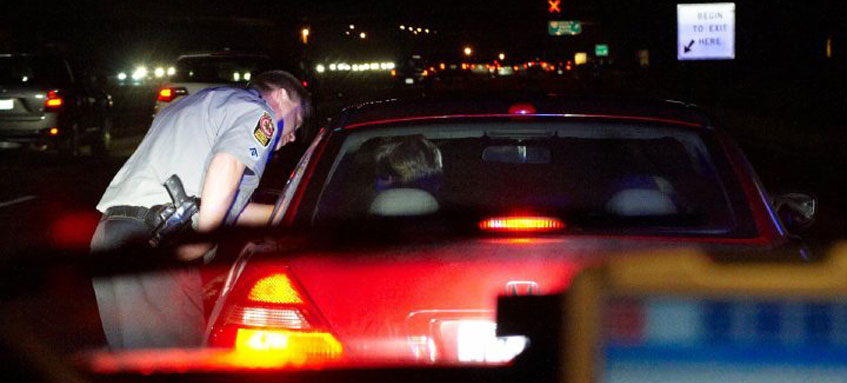
A DWI arrest in Lackawanna sets two separate clocks ticking at once: a criminal case in Lackawanna City Court and an administrative action at the New York DMV. Both can take your license, and they move on their own tracks. Sunil Bakshi and Joseph Leta defend Erie County drivers on both fronts, and the work begins with understanding exactly what you have been charged with and what it carries under New York law.
Driving While Intoxicated is the formal New York offense most people are facing when they are pulled over after drinking. The charge is graded by your blood alcohol concentration and by your history, and the grade controls the penalties. Before talking strategy, it helps to lay out the tiers plainly, because the number on the breath ticket tells you a great deal about what is at stake.
The BAC tiers and what each one costs
New York’s impaired-driving charges climb in steps. Each step is defined by a blood alcohol concentration and carries its own minimum penalties:
- DWAI by alcohol, BAC 0.05 to 0.07. A traffic infraction, not a crime. A first DWAI carries a fine of at least $300, up to 15 days in jail, and a 90-day license suspension. Because it is not a crime, it is frequently the result we negotiate toward.
- DWI, BAC 0.08 or higher. A misdemeanor on a first offense, punishable by a fine of at least $500, up to a year in jail, and a license revocation of at least six months. The charge can also rest on clear proof of intoxication rather than a number.
- Aggravated DWI, BAC 0.18 or higher. Still a misdemeanor on a first offense but the most serious standard tier, with a fine of at least $1,000 and a license revocation of at least one year.
- DWAI by drugs, and DWAI by combination. Impairment by a drug, or by drugs and alcohol together, which can be charged with no alcohol breath reading at all.
Those figures are the statutory minimums, and they sit on top of mandatory state surcharges and a Driver Responsibility Assessment. A conviction for DWI or Aggravated DWI also requires installation of an ignition interlock device on any vehicle you own or operate, a unit that you pay to lease and maintain, commonly running somewhere around $75 or more per month for the duration of the order, on top of an installation fee.
The single most consequential line on that ladder is the one between DWI and DWAI, because it is the line between a criminal conviction and a non-criminal one. A DWI is a misdemeanor that lives on your record and shows up on background checks. A DWAI is a traffic infraction, closer in kind to a serious moving violation. For someone whose job, professional license, or immigration status turns on staying free of criminal convictions, that single step down can be the whole case, and moving a charge toward the least serious result the facts will support is where much of our work goes.
The penalties a court announces are only part of the picture. The collateral costs of a DWI conviction often outlast the sentence: insurance premiums that climb steeply or are non-renewed, employment consequences for anyone who drives for a living or holds a commercial license, mandatory participation in the Impaired Driver Program, and the lasting weight of a criminal record on background checks. For a Lackawanna resident whose livelihood depends on getting to a job in Buffalo or on the industrial lakefront, those downstream effects can dwarf the fine itself, which is exactly why fighting for a reduction, rather than simply accepting the minimum, is so often worth it.
When a Lackawanna DWI becomes a felony
The numbers above describe first offenses. New York treats repeat impaired driving far more harshly. A second DWI committed within ten years of a prior DWI conviction is generally charged as a class E felony; a third within that same ten-year window can be elevated to a class D felony. Felony charges open the door to state prison, fines reaching into the thousands, longer revocations, and a permanent felony record that follows you through employment, housing, and licensing for the rest of your life. If you have a prior conviction anywhere in New York and now face a new charge in Lackawanna, the stakes are dramatically higher, and the defense has to be built accordingly from day one.
The DMV refusal hearing: a second front
Many drivers are stunned to learn that refusing the chemical breath test does not make the problem go away. It opens a second case. When you decline the test, the DMV schedules its own refusal hearing, wholly separate from the criminal matter in Lackawanna City Court. If the hearing officer finds against you on the issues at that hearing, that the stop and arrest were lawful, that the officer had reasonable grounds to believe you were driving while intoxicated, that you were warned of the consequences in clear and unequivocal language, and that you persisted in refusing the test, your license is revoked for at least one year and a civil penalty is imposed, regardless of what happens with the criminal charge. That hearing has tight deadlines and its own rules of proof. We appear at these hearings, cross-examine the arresting officer, and fight to preserve your driving privileges; you can read more on our DMV hearings page.
How a Lackawanna case moves, in City Court
Here is a distinction that genuinely matters and that many drivers do not expect. Most of the communities ringing Buffalo to the south (Hamburg, Orchard Park and West Seneca among them) are towns, and their cases are heard in town courts staffed by town justices. Lackawanna is different. It is an incorporated city, so a charge arising inside the city limits is generally heard in the Lackawanna City Court rather than in a neighboring town court. That changes the venue, the personnel, and the rhythm of how a case moves, and we account for it from the very first appearance.
From arraignment through pretrial motions and any plea negotiations, knowing the court where your matter will actually be called is part of building a sensible defense, not an afterthought. We handle the suppression motions that test the legality of the stop, the conduct of the field sobriety tests, and the foundation behind the breath result, and we keep you informed at each appearance.
Where DWI stops happen in Lackawanna
Lackawanna is a compact city wedged between Buffalo and the Southtowns on the Lake Erie shore, and its road network funnels an enormous amount of commuter traffic through a small footprint. Route 5, the Hamburg Turnpike, is the spine of that traffic, carrying drivers between downtown Buffalo and the southern suburbs straight through the heart of the city, and it draws steady patrol attention, especially after dark. Ridge Road, Abbott Road, and South Park Avenue handle much of the local and cross-town movement. Any of these corridors, late at night, can be the setting for a traffic stop that becomes a DWI arrest within minutes, and because Route 5 in particular is patrolled as a major artery, a disproportionate share of Lackawanna stops begin there.
The industrial lakefront adds its own character. The former Bethlehem Steel property (now a redevelopment corridor dotted with the “Steel Winds” turbines) and the surrounding access roads see their own traffic patterns, especially around shift changes and events. Lackawanna is also a city of close-knit neighborhoods, anchored by landmarks like the Our Lady of Victory Basilica, and a great many of the people we represent are lifelong residents stopped on roads they have driven their whole lives. Understanding how vehicles actually move through the city, and what an ordinary night out in Lackawanna looks like, helps us test whether an officer’s description of your driving holds together. Where and how a stop occurred is often where the defense begins.
What to do after a Lackawanna arrest
The hours after an arrest are the ones that most often shape the case, and a few simple choices can protect you. Be polite and cooperative about your identity, but understand that you are not required to talk your way out of the situation, and anything you volunteer about where you were or what you drank can become evidence. You generally have the right to consult a lawyer, and you should ask to do so. Write down everything you remember while it is fresh: the time, the road, what the officer said, how the field tests were conducted, and the weather and lighting. Those details feed directly into the motions we file. And do not ignore the paperwork you were handed, because the dates on it, including any DMV deadline, arrive faster than people expect.
Why an early, local defense matters
The single most valuable thing you can do after a Lackawanna DWI arrest is get a lawyer involved early. Evidence is most useful while it is fresh: breath-instrument calibration records, in-car and body-worn camera footage, dispatch logs, and the maintenance history of the testing device all have to be requested before they age out or are overwritten. The DMV refusal deadline arrives quickly. And the earliest court appearances often set the tone for everything that follows. The longer a case sits unattended, the fewer options remain. We move at the start so the full range of defenses (suppression, reduction, and where warranted, trial) stays open to you.
Challenging the evidence behind the charge
Every Lackawanna case is built from the same raw materials: the reason for the stop, the roadside field sobriety tests, and the chemical breath test that usually follows an arrest. Each is open to challenge. A breath reading can look conclusive and still be vulnerable. The instrument must be properly calibrated, maintained on schedule, and operated by a certified technician, and the supporting records have to be intact. We obtain them and scrutinize them. The field sobriety tests (the walk-and-turn, the one-leg stand and the gaze test) are scored by an officer’s judgment and are easily distorted by the cold wind off Lake Erie, uneven pavement, footwear, a medical condition, or simple anxiety. And every stop must rest on a lawful, articulable basis, with any checkpoint run by published procedures rather than an officer’s hunch.
There are also physiological wrinkles that a careful defense pursues. Rising blood alcohol means the number measured at the station may be higher than your level at the wheel, because alcohol is still being absorbed. Certain medical conditions, diets, and even residual mouth alcohol can skew a breath result upward. The twenty-minute observation period before the test exists for a reason, and lapses in it matter. Each of these is a thread we pull when the case calls for it.
What a good outcome can look like
People often assume an arrest means an automatic conviction, but that is rarely how these cases end. Depending on the evidence and your record, the realistic goals range widely: a complete dismissal where the stop or the testing was unlawful, a reduction from a DWI misdemeanor down to a DWAI traffic infraction that keeps your record free of a crime, or a negotiated resolution that minimizes the fine, the license impact, and the lasting consequences. When the foundation behind a reading proves weak, charges can be reduced or dismissed outright. Every Lackawanna case is different, and we do not promise results, but we do promise to identify the best outcome the facts will support and to pursue it relentlessly.
Protecting your license while we work
For most people in Lackawanna, driving is not optional. A suspension can jeopardize a job in Buffalo, a shift on the industrial lakefront, or the daily logistics of getting children to school. Your driving privileges are typically suspended at arraignment, but we move quickly to obtain hardship privileges and, soon after, a conditional license so your life does not stall while the case is pending. Learn more about the underlying offense on our DWI defense page, or see every community we serve on our areas we serve page.
Lackawanna DWI questions
Frequently asked questions
Call (716) 631-0004 for answers specific to your case.
New York sets several thresholds. A BAC of 0.05 to 0.07 supports a DWAI, a traffic infraction. A BAC of 0.08 or higher supports a DWI, a misdemeanor. A BAC of 0.18 or higher supports Aggravated DWI, the most serious standard tier. We defend each of these in Lackawanna City Court and across Erie County.
DWI is a misdemeanor crime, generally tied to a blood alcohol concentration of 0.08 percent or higher. DWAI by alcohol is a traffic infraction, not a crime, charged in the 0.05 to 0.07 range or where impairment is shown by other evidence. Reducing a DWI to a DWAI is often a central goal of the defense, because it is the difference between a criminal conviction and a non-criminal one.
A first-offense DWI is a misdemeanor punishable by a fine of at least $500, a license revocation of at least six months, and possible jail, plus state surcharges and a required ignition interlock device. A DWAI carries a fine of at least $300 and a 90-day suspension. Aggravated DWI raises the minimum fine to $1,000 and the revocation to a year.
Yes. A second DWI within ten years of a prior DWI conviction is generally charged as a class E felony, and a third within ten years can be a class D felony. Felony exposure means potential state prison, far higher fines, and a permanent criminal record, which is why early defense matters so much.
Yes. Lackawanna is a city, not a town, so it has its own Lackawanna City Court where charges arising within the city are heard. That sets it apart from the surrounding Southtowns, which use town courts. We appear in the Lackawanna City Court and across the courts of Erie County.
Route 5, the Hamburg Turnpike, is a heavily patrolled commuter corridor through Lackawanna, but every stop still needs a lawful basis. We review why you were pulled over, what the officer claims to have observed, and whether any checkpoint followed required procedures, because a defective stop can lead to suppression of the evidence.
Yes. If you refused the chemical breath test, the DMV holds its own refusal hearing that is entirely separate from the criminal case in Lackawanna City Court. A finding against you there can revoke your license for at least one year, independent of the court outcome, so both fronts have to be defended.
Arrested for DWI in Lackawanna? Call now.
From the BAC tiers to the DMV refusal hearing, a Lackawanna DWI is two fights at once, and the sooner you call, the more we can do to protect your license and your record. Free, confidential consultation.