The City of Tonawanda is one of Erie County’s most compact and lively communities, a riverfront city tucked against the Niagara River at the western end of the Erie Canal, where Gateway Harbor draws crowds all summer and the downtown grid stays busy well into the night. A DWI arrest here is not handled by a part-time rural court; it is heard in the Tonawanda City Court, a full-time court of record with a steady, fast-moving docket. If you have been charged, Sunil Bakshi and Joseph Leta can step in immediately to protect your license, your record, and your peace of mind.
An arrest in a small city moves quickly, and the paperwork in your hand can be confusing precisely because of where Tonawanda sits on the map. Before anything else, it helps to be certain which court actually has your case, because in Western New York the name “Tonawanda” attaches to three separate places, and they are not interchangeable.
City of Tonawanda, North Tonawanda, and the Town of Tonawanda are not the same
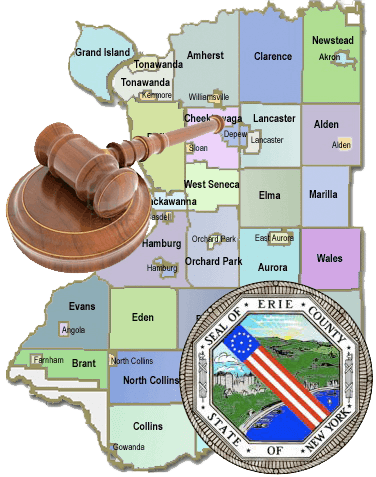
This is the single most common source of confusion for people charged in the area, so it is worth getting right at the start. The City of Tonawanda is in Erie County, on the south side of the Erie Canal where the canal meets the Niagara River, and its DWI cases go to the Tonawanda City Court. Directly across the water sits North Tonawanda, a separate city in Niagara County, with its own court and its own prosecutors; a charge there is a Niagara County matter, not an Erie County one. To complicate things further, the Town of Tonawanda is yet another municipality, also in Erie County, but a distinct town with its own town court, surrounding the city to the south and east. Standing on the wrong side of a bridge can literally change which county, which court, and which prosecutor handles your case. If your appearance ticket is unclear, bring it to us and we will confirm exactly where you are due to appear.
How the Tonawanda City Court differs from a town court
Because Tonawanda is a chartered city rather than a town, it operates a City Court led by an elected City Court judge who sits full-time. That distinction is more than a label. Unlike a part-time town justice court that convenes only a few evenings a month, a city court keeps a regular weekday calendar, processes a larger and more continuous flow of cases, and is staffed by assistant district attorneys who appear there routinely. For a defendant, that means the matter generally proceeds on a tighter schedule, with less of the spacing you would find in a rural justice court and more reliance on knowing how this specific court manages its DWI calendar.
None of that makes a city-court case harder to defend. It simply calls for a different approach. We pace our motions, discovery requests, and negotiations to the rhythm of a busy city docket, and we know the practical realities of how Tonawanda City Court handles arraignments, conditional licenses, and plea discussions. That local familiarity is what lets us move efficiently instead of getting lost in the volume.
Where City of Tonawanda DWI stops happen
The City of Tonawanda is small and densely built, so enforcement concentrates on the handful of arteries that carry traffic through downtown and along the water. Stops most often originate on Main Street, Delaware Street, and Young Street, and along the corridors feeding the Niagara River waterfront, Gateway Harbor, and the canal terminus. These are exactly the areas that fill with cars during summer concerts, festivals, and weekend evenings, and City of Tonawanda police patrol them closely when foot and vehicle traffic is heavy.
A DWI stop on any of these roads frequently begins with something minor, such as a rolling stop at a downtown intersection, a brake light out, or a wide turn near the harbor, before it escalates into a sobriety investigation. The legal basis for that initial stop is one of the first things we examine. Under both the federal and New York constitutions, an officer must have a lawful, articulable reason to pull a vehicle over. If that justification was missing or weak, the evidence gathered afterward (the roadside observations, field tests, and chemical result) may be vulnerable to suppression, and that can reshape the entire case.
The charges New York brings: DWI and DWAI
New York’s alcohol-related driving charges are DWI (Driving While Intoxicated) and DWAI (Driving While Ability Impaired). A standard DWI is typically charged at a blood-alcohol content of 0.08% or higher and is a misdemeanor for a first offense, carrying a license revocation of at least six months and a fine of no less than $500. DWAI by alcohol, generally charged between 0.05% and 0.07%, is a traffic infraction and is frequently the target of a successful negotiation. A reading of 0.18% or above is charged as Aggravated DWI, and a second alcohol-related conviction within ten years can be elevated to a felony.
Whichever charge appears on your paperwork, the defense questions are the same: was the stop lawful, were the field sobriety tests given correctly, and was the breath or blood instrument properly calibrated, maintained, and operated by a certified technician? In a high-volume court like Tonawanda City Court, a carefully documented challenge on these points is often what moves a case away from a conviction and toward a reduced charge or dismissal.
Your license, the DMV, and the refusal hearing
Losing your license is rarely a small thing, and in a riverfront city where many residents commute across the bridges to jobs throughout Erie and Niagara Counties, it can be devastating. At your City Court arraignment the judge will ordinarily suspend your driving privileges, but we can often act right away to obtain hardship privileges and, in time, a conditional license, so you can keep getting to work, school, and medical appointments while the case is pending. If you declined the chemical test, you face a wholly separate DMV refusal hearing with its own one-year revocation, and we represent you at that administrative proceeding alongside the criminal case.
The consequences reach beyond driving. A DWI conviction can require an ignition interlock device on every vehicle registered to you, drive up insurance costs, leave a permanent criminal record, and create problems for employment, professional licensing, and travel across the nearby Canadian border. For most clients these collateral effects are the real worry, and addressing them is central to how we build a defense.
Why drivers turn to Bakshi & Leta in Erie County courts
From our office on Main Street in Williamsville, we have defended DWI clients across Erie County for decades, in the busy city courts as well as the smaller town and village courts. We understand that a case in a full-time city court like Tonawanda calls for steady momentum and a clear strategy from day one, and we bring that to every appearance, from the morning after an arrest through arraignment, motions, negotiation, and trial if it comes to that. Throughout, we keep you informed so you always know what is happening and why.
If you were charged elsewhere in the region, or you simply want to see the full range of communities and courts we handle, visit our areas we serve page. Wherever your case is heard, our goal is the same: the strongest possible outcome with the least disruption to your life.
A DWI in the City of Tonawanda deserves serious, experienced defense built for a busy city court. Call Bakshi & Leta today at (716) 631-0004 for a free, confidential consultation.
Tonawanda City Court
Frequently asked questions
Call (716) 631-0004 for answers specific to your case.
No. The City of Tonawanda sits in Erie County on the south bank of the Erie Canal, and its DWI cases are heard in Tonawanda City Court. North Tonawanda is a separate city directly across the water in Niagara County, with its own court. The nearby Town of Tonawanda is also in Erie County but a distinct municipality with its own town court. If you are unsure which court has your case, check the appearance ticket or call us with the paperwork in hand.
Tonawanda City Court is a full-time court of record presided over by an elected City Court judge, and it generally sits on a regular weekday schedule with a busier, faster-moving docket than a part-time town justice court. The DWI law and penalties are identical, but the pace, procedure, and prosecutor staffing differ, which is why familiarity with this particular city court matters.
At arraignment the judge informs you of the charge, addresses your driving privileges, and sets the conditions of your release. The court will usually suspend your license at this first appearance, and we can often move immediately to request hardship privileges so you can continue getting to work and essential obligations while the case proceeds.
In this small, dense city, enforcement concentrates along Main Street, Delaware Street, and Young Street, and on the corridors near the Niagara River waterfront, Gateway Harbor, and the canal terminus where weekend and event traffic is heavy. A stop on any of these roads can lead to a DWI charge returnable in Tonawanda City Court.
Charged with DWI in Tonawanda? Call now.
The sooner you call, the more we can do to protect your license and your record in the Tonawanda City Court. Free, confidential consultation.