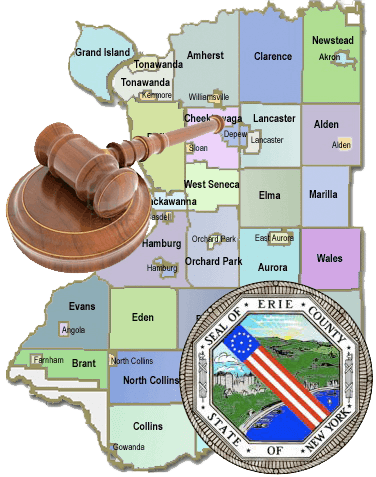
Tucked into the southeastern edge of Erie County, the Town of Wales is open countryside: rolling fields, woodlots, and the trout streams and trails around Hunters Creek Park. There are no traffic lights to speak of and almost nothing in the way of nightlife, yet a single late drive home along an unlit county road can end in a Driving While Intoxicated arrest. If your case is returnable in the Wales Town Court, attorneys Sunil Bakshi and Joseph Leta are ready to step in and defend it.
A DWI accusation is disorienting precisely because it so often lands on people who have never faced a criminal charge of any kind. One moment you are driving a familiar road; the next you are handed an appearance ticket and told to report to a small town hall on a specific evening. The court may feel low-key, but the charge is anything but, and the path you choose in the first days afterward shapes everything that follows. Our job is to take that uncertainty off your shoulders and replace it with a plan.
Because Wales draws traffic from across the surrounding hill country, including hunters and anglers headed for the creek, farmers running between fields, and residents commuting toward Aurora or East Aurora for work, the people who end up before this court come from well beyond the town line. We have represented drivers who were simply passing through Wales on Route 20A when a routine stop turned into an arrest, as well as longtime residents who know every bend of these roads. Wherever you live, if the ticket says Wales Town Court, that is where the matter will be decided, and that is where our experience is focused.
A part-time court with full-weight consequences
The Wales Town Court is a justice court, one of New York’s roughly 1,200 local courts presided over by elected town justices who serve part-time and are not required to be attorneys. It convenes on a handful of scheduled evenings each month and carries a modest caseload of traffic matters, violations, misdemeanors, and the opening steps of any felony arising within town lines. Sessions are intimate: a single justice, one clerk, the prosecutor, and a short calendar. None of that softens the stakes. The intoxicated-driving statutes that apply here are the very same ones enforced in Buffalo City Court, and the fines, revocations, and lasting record are no smaller for having been imposed in a country town hall.
The lighter calendar can actually work in a defendant’s favor. Without the relentless churn of an urban docket, there is breathing room to obtain discovery, review the officer’s paperwork line by line, file pretrial motions, and pursue negotiations at a deliberate pace. What turns that breathing room into results, though, is knowing how this particular court runs: the cadence of its sessions, the expectations of the justice on the bench, and the disposition of the prosecutor who handles its DWI files. That sense for local practice is something we have built over many years in the rural courts of Erie County.
The roads where Wales arrests begin
In a town this spread out, enforcement gravitates to the routes that actually carry traffic. The arteries to watch in Wales are Route 20A, Big Tree Road, and Hunters Creek Road (the corridors that thread through the hamlets and link Wales to neighboring Aurora, Holland, and Marilla). New York State Police troopers and Erie County Sheriff’s deputies run these roads on weekend nights, and an encounter frequently starts with something small: a burned-out taillight, a rolling stop at a dark crossroads, or a wheel touching the fog line on a shoulderless stretch of pavement.
That initial reason for the stop is far more important than most drivers realize. Both the federal and New York constitutions require an officer to have a lawful, articulable justification before pulling a car over. One of the earliest things we do on a Wales case is pull apart that stop and test whether it holds up. If the basis was legally thin, the chain of evidence that followed (the roadside observations, the field sobriety tests, the breath or blood reading) may be vulnerable to a suppression motion, and a successful challenge there can collapse the prosecution’s case or force a far more favorable resolution.
The charges New York actually brings
New York’s intoxicated-driving statutes set out two offenses, and the distinction between them shapes everything from the fine to the length of a revocation. They are DWI (Driving While Intoxicated) and DWAI (Driving While Ability Impaired). A common-law or per se DWI is generally charged at a blood-alcohol concentration of 0.08% or more and is a misdemeanor on a first offense, carrying at least a six-month license revocation and a fine starting at $500. DWAI by alcohol, typically charged in the 0.05% to 0.07% range, is a traffic infraction and is often the destination of a well-built negotiation. A reading of 0.18% or higher elevates the matter to Aggravated DWI, and a second alcohol-related conviction inside ten years can be prosecuted as a felony.
Whatever heading sits at the top of your paperwork, the questions that decide the case are constant. Was the stop lawful? Were the field sobriety tests given according to standardized procedure on uneven rural ground? Was the testing instrument properly calibrated, maintained, and operated by a certified technician within the required timeframe? In a quiet court like Wales, methodically documenting the weak points in the State’s proof is frequently what stands between a conviction and a result you can live with.
Your license, the DMV, and the long tail of a conviction
Out in Wales there is no bus, no train, and no rideshare waiting around the corner; reaching a job, a doctor, or a grocery run means getting behind the wheel. A suspended license is therefore not an inconvenience but a genuine hardship, which is why protecting your ability to drive is among our first moves. At arraignment the court will ordinarily suspend your privileges, but we can often act right away to secure hardship driving privileges and, before long, a conditional license that keeps essential trips lawful while the case proceeds. If you declined the chemical test, you also face a separate Department of Motor Vehicles refusal hearing carrying its own one-year revocation, and we represent you in that proceeding alongside the criminal matter.
The fallout from a conviction reaches well past the courtroom. It can mean an ignition interlock device installed on every vehicle registered in your name, sharply higher insurance premiums, a permanent criminal record, and obstacles to employment, professional licensure, and even crossing into nearby Canada. For many of our clients these downstream effects weigh heaviest of all, and we keep them squarely in view from the very first conversation through to the resolution of the case.
Erie County town-court experience, close to home
Working from our office on Main Street in Williamsville, we have spent decades defending DWI clients in courts across Erie County, including the small rural justice courts that serve the county’s southern and eastern towns. A matter in Wales asks for a different touch than a case downtown: quieter, more personal, more shaped by local procedure, and frequently more receptive to a thoughtful negotiated outcome. We bring that perspective to every arraignment, conference, and appearance.
Throughout it all we keep you genuinely informed, from the morning after the arrest through motions, plea discussions, and trial if it comes to that, so you are never left guessing about where things stand. We explain the evidence in plain language, lay out the realistic range of outcomes, and make sure you understand each decision before it is made. A first DWI in a town like Wales is rarely the catastrophe people fear in the first frightened hours after an arrest; with prompt, capable representation there is real room to protect your license, limit the damage to your record, and put the matter behind you. To see the broader range of communities and courts we cover, take a look at our areas we serve page.
A DWI charged in the Town of Wales calls for the same serious, experienced representation as any case in Western New York, and the sooner you reach us, the more we can do. Call Bakshi & Leta today at (716) 631-0004 for a free, confidential consultation.
A DWI or DWAI charged anywhere within the Town of Wales is generally returnable in the Wales Town Court, the local justice court serving this rural pocket of southeastern Erie County. The appearance ticket handed to you at the scene will state the date and time you are ordered to appear.
As soon as you can. If you refused the breath or blood test, the DMV gives you only a short window to request the refusal hearing that decides whether your license is revoked, and evidence such as dashcam footage and calibration logs is easiest to preserve early. Calling promptly lets us act before deadlines pass.
At arraignment the court usually suspends your driving privileges pending the case, but we can often move the same evening for hardship privileges and later a conditional license. Because Wales is remote farm country with no transit, restoring some lawful driving ability is one of our first priorities.
It matters a great deal. A small justice court that sits only a couple of evenings a month is run by part-time elected justices and a single clerk, and outcomes can turn on familiarity with that court’s routine and the assigned prosecutor. Experience appearing in Erie County’s rural courts is a genuine advantage.
Charged with DWI in Wales? Call now.
The sooner you call, the more we can do to protect your license and your record in the Wales Town Court. Free, confidential consultation.