If you were arrested for drunk driving anywhere near Williamsville and went looking for the “Williamsville Town Court,” you will not find one, and that confusion is completely understandable. Williamsville is a village, not a town, and where your case is actually heard depends on exactly where the stop happened. Bakshi & Leta sit right in the middle of all of it: our office is at 5662 Main St., in the heart of the village, and we defend DWI cases in the very courts that handle this area every week.
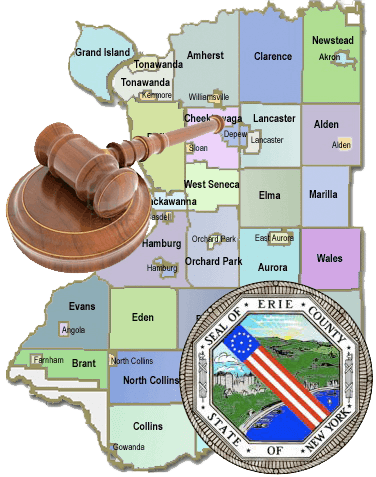
The first thing worth clearing up is the geography, because it controls everything that follows. Williamsville is an incorporated village located entirely inside the Town of Amherst, in Erie County. There is no standalone “Town of Williamsville,” and therefore no Williamsville Town Court. Instead, a drunk-driving charge from this corner of Erie County lands in one of two local courts depending on a single fact: did the alleged offense occur inside the village limits, or in the surrounding town?
Amherst Town Court or Williamsville Village Court?
If you were stopped within the boundaries of the Village of Williamsville, your matter is generally returnable in the Williamsville Village Court. If the stop happened anywhere else in the Town of Amherst, which is far larger and wraps around the village on every side, the case is typically heard in the Amherst Town Court. Most drivers have no idea which jurisdiction they were in when the lights came on behind them, and that is fine; the appearance ticket or paperwork you were handed will name the court and the date you must appear. Read it carefully, and bring it with you when you call us.
Both courts apply the identical New York law and impose the identical penalties, so the choice of courthouse is not about one being “easier” than the other. What differs is the practical texture: the calendar, the prosecutor handling the part that night, the way a particular judge prefers a license application or a motion to be presented. Because we are based on Main Street and appear in both the Amherst and Williamsville courts continually, we walk in already knowing how each one operates. For someone facing a frightening first arrest, that head start matters.
Where Williamsville-area DWI stops happen
Enforcement around Williamsville clusters on the busy commercial and commuter corridors that thread through the village and the larger town. The big three are Main Street (Route 5), which runs straight through the village and past our front door; Union Road, a heavily traveled north-south artery; and Transit Road, the perennially congested retail spine along the eastern edge of Amherst. Amherst Police, the Erie County Sheriff’s Office, and the State Police all patrol these roads, and weekend and late-night DWI stops are common along every one of them.
A stop on Main Street or Transit Road frequently begins with something small: a rolling stop at a red light, a brake lamp out, lingering too long at a green, or a lane drift near one of the village’s many tight intersections. None of that is unusual, and none of it automatically proves intoxication. What it does is give an officer a reason to make contact, and from there the encounter escalates into roadside questions, field sobriety tests, and a request for a breath sample. The lawfulness of that very first stop is often the hinge on which the whole case turns, and it is one of the first things we examine.
DWI and DWAI charges in these courts
The charges that come across the calendar in the Amherst and Williamsville courts are DWI (Driving While Intoxicated) and DWAI (Driving While Ability Impaired). A standard DWI is generally charged at a blood-alcohol concentration of 0.08% or higher and is a misdemeanor on a first offense, carrying a minimum six-month license revocation and a fine starting at $500. DWAI by alcohol is a lesser traffic infraction, usually in the 0.05% to 0.07% range, and is frequently the target of a well-built negotiation. At 0.18% or above the charge becomes Aggravated DWI, and a second alcohol-related conviction within ten years can be elevated to a felony.
The label printed on your ticket does not change the defense. In every case we ask the same core questions: was there a lawful basis for the stop, were the standardized field sobriety tests administered the way the manuals require, and was the breath or blood instrument properly calibrated, maintained, and operated by a certified technician? In the Amherst and Williamsville courts, a careful, documented challenge on these points is regularly the difference between a conviction and a substantially better result.
Your license, the DMV, and the refusal hearing
For most people in and around Williamsville, losing the ability to drive is the most immediate fear, and reasonably so: daily life here runs on cars, and the commercial corridors that surround the village are not built for anyone on foot. At arraignment the court will ordinarily suspend your driving privileges, but we can often act quickly to obtain hardship privileges and, in time, a conditional license so you can keep getting to work, school, and medical appointments while the case proceeds. None of that happens automatically; it requires the right application at the right moment.
There is also a second, parallel track that catches many drivers off guard. If you declined the chemical breath or blood test, the New York DMV opens its own refusal hearing, entirely separate from the criminal court, with its own potential one-year revocation and its own deadlines. Missing that hearing can cost you your license independent of what happens with the DWI itself. We handle the refusal hearing in tandem with the court case so the two are coordinated rather than working against each other.
A firm rooted on Main Street in Williamsville
Plenty of attorneys will tell you they cover Williamsville. Far fewer actually work here. Sunil Bakshi and Joseph Leta practice out of 5662 Main St., inside the village, a short drive from the Amherst Town Court and the Williamsville Village Court alike. We are not commuting in from another county to handle your matter: these are our home courts, these are our home roads, and we know the rhythm of how DWI cases move through them. That proximity is not a marketing line; it is reflected in how prepared we are the moment we appear on your behalf.
Just as important, we keep you informed at every step, from the morning after the arrest through arraignment, motions, negotiations, and trial if it ever comes to that. You will never be left guessing about what is happening or why. If you want to see the full set of communities and courts we cover throughout the region, our areas we serve page lays it out.
A drunk-driving charge in the Williamsville area is too serious to navigate alone, especially when even figuring out which court hears your case takes local knowledge. Call Bakshi & Leta, right here on Main Street, at (716) 631-0004 for a free, confidential consultation.
No. Williamsville is an incorporated village inside the Town of Amherst, not a separate town, so there is no “Williamsville Town Court.” A DWI in the area is heard either in the Amherst Town Court, for offenses in the town outside the village limits, or in the Williamsville Village Court, for offenses within the village itself. Your appearance ticket tells you which court to report to.
Both are local courts within the same town, but they cover different ground. The Amherst Town Court handles cases arising anywhere in the Town of Amherst outside the village, while the Williamsville Village Court handles offenses charged inside the village boundaries. They follow the same Vehicle and Traffic Law, and we appear in both.
Yes. Our office sits at 5662 Main St. in the heart of Williamsville, which means we work in these courts constantly and know the local roads where stops happen, including Main Street, Union Road, and Transit Road. That day-to-day familiarity with how Amherst and Williamsville handle DWI matters is a genuine advantage for our clients.
New York’s statutes charge DWI (Driving While Intoxicated), generally at a blood-alcohol concentration of 0.08% or higher, and DWAI (Driving While Ability Impaired), a lesser traffic infraction usually in the 0.05% to 0.07% range. Whichever appears on your ticket, the defense is the same: we examine whether the stop was lawful, whether the field tests were done correctly, and whether the chemical test was properly administered.
Charged with DWI in the Williamsville area? Call now.
The sooner you call, the more we can do to protect your license and your record in the Amherst Town Court or Williamsville Village Court. Free, confidential consultation from a firm right on Main Street.